EU Climate Policy in Flux: What It Means for Corporate Sustainability Strategy
August 28, 2025
Climate Strategy & Policy, Alliances, Statements
The EU’s climate policy landscape is shifting rapidly. The Green Claims Directive (GCD) has stalled, the Corporate Sustainability Reporting Directive (CSRD) and its detailed standards (ESRS) are being scaled back, and the new Carbon Removal Certification Framework (CRCF) is beginning to take shape. For corporate sustainability managers, these changes mean more than just compliance: they influence how companies communicate climate action, disclose progress, and integrate carbon removals into long-term strategies.
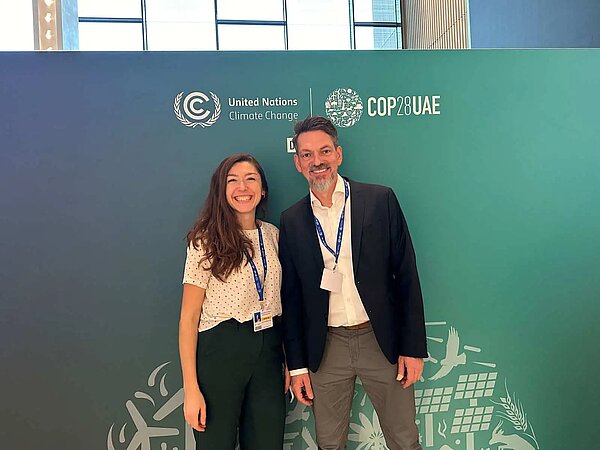
At FORLIANCE, we work closely with the International Emissions Trading Association (IETA), the leading global business voice on carbon markets. IETA engages directly with EU policymakers, ensuring that legislation supports both environmental integrity and business feasibility. Through this partnership, FORLIANCE helps businesses interpret shifting policies and maintain ambitious, credible climate strategies in a time of uncertainty.

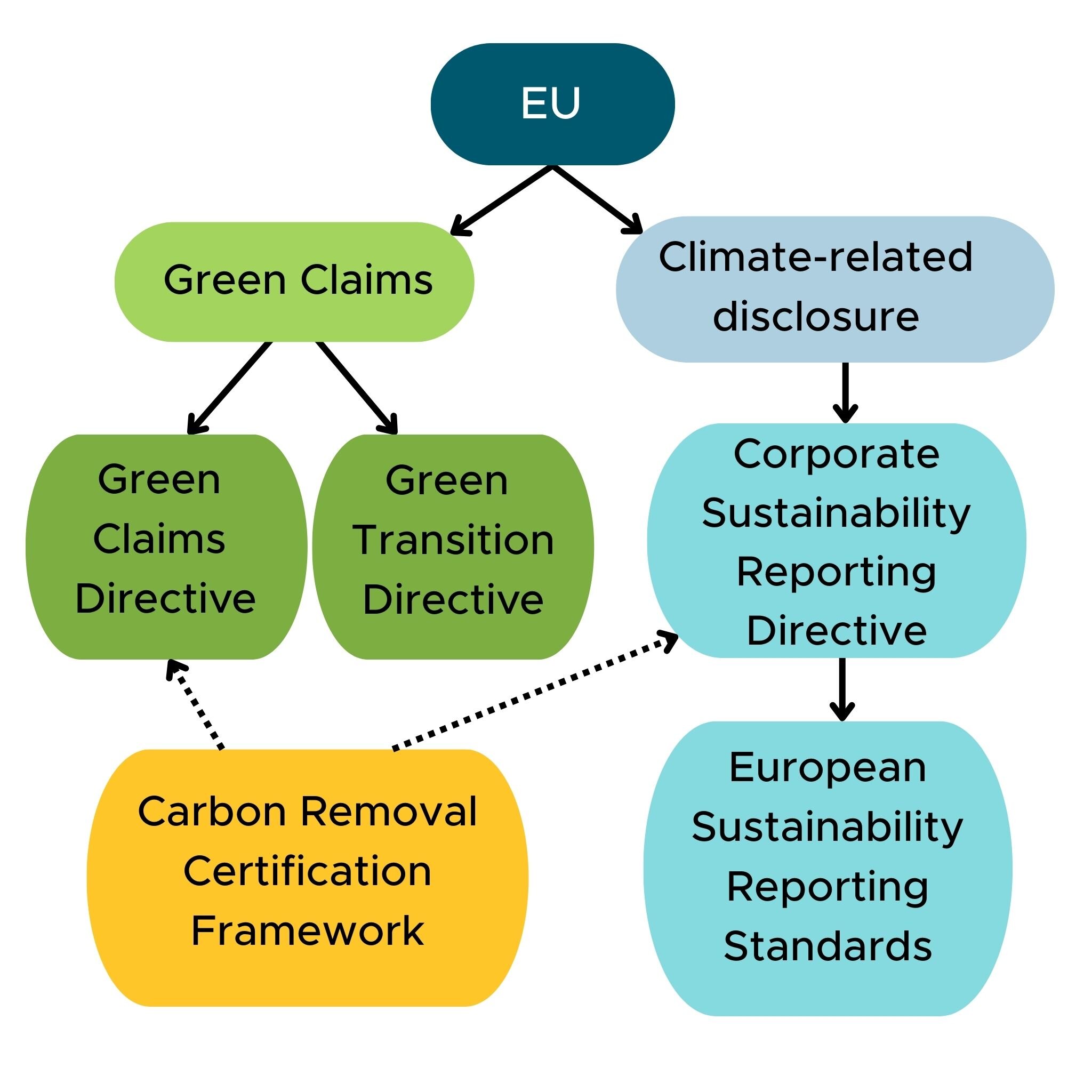
The EU’s approach to green claims, disclosure, and carbon removals is interconnected. This diagram shows how the Green Claims Directive, CSRD/ESRS, and CRCF overlap in shaping corporate climate action.
Green Claims Directive: A Pause, Not an End
The Green Claims Directive was designed to protect consumers from misleading claims like “carbon neutral” or “climate positive,” by requiring companies to back such statements with verifiable evidence. But in June 2025, the European Commission cancelled final negotiations and announced its intention to withdraw the proposal. The reasoning: a fear that the law would overburden Europe’s 30 million micro-enterprises.
The result is a policy vacuum. Businesses want to communicate their climate action – but without clear EU rules, they risk either being accused of greenwashing or staying silent (“greenhushing”).
IETA’s stance – which FORLIANCE supports – offers a pragmatic path forward:
- Keep the Directive alive, but remove references to ESRS, which are themselves under revision.
- Allow both emission reduction credits and removal credits in claims until net zero is achieved, to avoid discouraging near-term action.
- Once net zero is reached, only removals should be eligible for residual emissions.
- Recognize both nature-based and engineered removals, especially those certified under the CRCF.
This balanced approach ensures climate communication is credible, but also keeps companies motivated to invest in carbon markets today rather than waiting for perfect policy clarity.
CRCF: Building Integrity for Removals
The Carbon Removal Certification Framework (CRCF) is the EU’s first attempt to create a trusted system for certifying removals. Its scope covers engineered solutions (like DACCS and Bio-CCS) first, with nature-based removals expected to follow. While CRCF credits are not yet eligible for EU ETS or corporate claims, the framework signals a recognition: removals are essential to net zero.
IETA recommends:
- Methodologies that ensure permanence, monitoring, and verification.
- Alignment with global frameworks (Article 6, ICVCM) to avoid market fragmentation.
- Interoperability with EU systems like the ETS registry.
- A clear, practical roadmap for developers so high-quality projects can scale quickly.
For companies, this means CRCF-certified credits will soon represent the highest integrity removal units in Europe. Even before their use in claims is defined, forward-looking businesses should start exploring how removals fit into their climate strategies.
CSRD and ESRS: Looser Rules, Same Expectations
The Corporate Sustainability Reporting Directive (CSRD), once set to dramatically expand corporate disclosure, is being softened. The Omnibus I & II packages raise thresholds, delay timelines, and reduce required datapoints. The July 2025 ESRS consultation goes further, proposing a 50% cut in mandatory indicators.
This is meant to ease the burden on companies, but it also creates less comparability and transparency across the EU market. For investors, NGOs, and regulators, the demand for credible disclosure remains – even if the law temporarily demands less.
FORLIANCE’s advice: don’t scale down your ambitions just because the rules did. Use the breathing room to strengthen data quality, materiality assessments, and internal systems. Companies that continue to report transparently – even if exempt – will be better positioned for future regulation and will stand out as credible actors.
Moving Forward
The EU’s shifting rules reflect political tension: a push to ease burdens while still demanding ambition and credibility. For companies, this makes the path forward less straightforward – but not less important.
Through our partnership with IETA, FORLIANCE translates this flux into strategy. We help companies:
- Make climate claims that are credible under current and future EU rules.
- Integrate high-quality carbon credits and removals into their strategies.
- Build transparent disclosure practices that go beyond compliance.
Get in touch with our experts to ensure your climate claims, disclosures, and removals strategy remain credible, ambitious, and future-proof.