The Compliance Shift: Why Smart Companies Turn to Nature-Based Credits

August 07, 2025
Climate Strategy & Policy

As net-zero targets tighten and carbon pricing mechanisms expand, companies are navigating a shifting compliance landscape. Instruments like carbon taxes and emissions trading systems (ETS) are driving demand for low-carbon transformation—and they also open doors to strategic flexibility.

International frameworks such as Article 6 of the Paris Agreement  and CORSIA for aviation allow for using carbon credits in decarbonization strategies. These mechanisms aren't just helpful, they’re essential for achieving targets in a cost-effective, scalable way.

And as the supply of eligible credits remains limited, nature-based solutions (NBS) are stepping into a critical role: delivering real climate impact while helping corporates stay ahead of growing regulatory pressure. 
Carbon Pricing 101: Taxes vs ETS and Where Credits Fit In

Carbon pricing instruments place a financial cost on greenhouse gas emissions, internalizing the environmental damage into economic decision-making. Policymakers use them as a market-based tool to encourage cost-effective abatement: companies and consumers will reduce emissions if it’s cheaper than paying the carbon price. As World Bank Senior Director Axel van Trotsenburg notes, carbon pricing “helps countries cut emissions, raise domestic revenues… and stimulate green growth and job creation” (carboncredits.com). In practice, carbon pricing takes two primary forms – carbon taxes and emissions trading systems (ETS) – both aiming to reduce emissions but through slightly different mechanics.

  • Carbon Taxes: A government-set fee per ton of CO₂ (or equivalent) emitted. This directly prices emissions, giving emitters a clear cost for each ton. The market then determines the resulting emission reductions (the “cap”), as companies will cut emissions until the cost of abatement equals the tax. Taxes provide price certainty but not an explicit emissions quantity limit.
  • Emissions Trading Systems (Cap-and-Trade): The government caps total emissions by issuing a limited number of allowances (each typically 1 ton CO₂). Companies must hold allowances for their emissions, and they can trade allowances in a market. This lets the market set the price of allowances based on supply and demand, while the cap ensures a specific emissions outcome. Well-known ETS examples include the EU Emissions Trading System and regional programs in North America and Asia.

Carbon credits enter the picture as a flexibility mechanism in both approaches. Credits (usually representing 1 ton of CO₂ reduced or removed) can be generated by projects outside capped sectors or in other countries, and purchased by emitters to meet obligations. This allows cheaper abatement opportunities elsewhere to be utilized, lowering overall costs. In effect, an emitter pays for reductions where they are most cost-effective – which is exactly the efficiency promise of carbon markets.
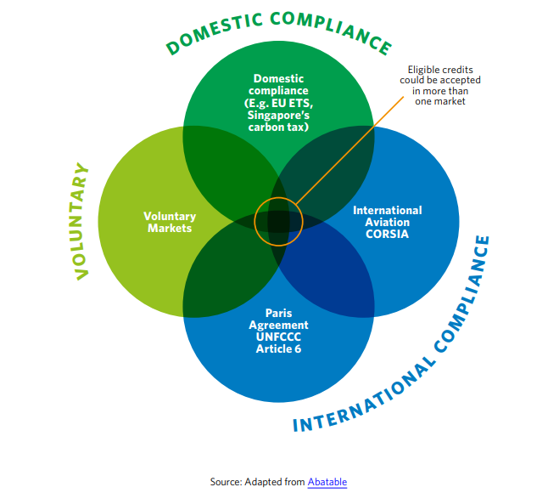
Adapted from Abatable
Carbon Pricing: Where We Stand—and Why It Matters for Corporates

By mid‑2025, 80 pricing schemes (43 taxes, 37 ETS) cover about 28% of global emissions, up from 24% last year—the fastest expansion on record (Weltbank DokumenteSustainability Mag). Yet this still leaves over 70% of emissions unpriced, particularly in emerging sectors and markets.

Simply put: businesses operating globally cannot rely solely on regulation to account for their emissions footprint. Internal carbon pricing and strategic use of carbon credits remain essential tools for managing climate risk and unlocking low‑carbon opportunities. Moreover, as compliance markets mature, they exert upward pressure on voluntary credit standards and prices—making early engagement beneficial.

Article 6 Explained: Cross‑Border Emission Trading

Domestic carbon pricing alone won’t get us to net zero. To cut emissions cost-effectively at a global scale, countries need tools to collaborate—and that’s where Article 6 of the Paris Agreement comes in. It allows countries, and in some cases companies with government approval, to trade carbon credits across borders and count them towards national climate goals (National Determined Contributions = NDCs). Done right, this can unlock finance, accelerate mitigation where it’s cheapest, and support sustainable development.

Article 6 is made up of two main mechanisms:

  • Article 6.2 enables countries to sign bilateral or multilateral deals to trade “mitigation outcomes” (like tons of CO₂). The rules are flexible, but each country must transparently account for trades and apply a corresponding adjustment—an emissions bookkeeping method to prevent double counting.
  • Article 6.4 introduces a UN-run crediting system, similar to the old CDM, where approved projects earn certified credits (A6.4ERs). These can be used by countries or companies, but if used toward another country’s target or a scheme like CORSIA, the host country must authorize the export and apply a corresponding adjustment.

This concept of corresponding adjustments is central to Article 6. It ensures that only one party claims a given reduction. Without this step, credits can still be used voluntarily—but not for official climate targets or regulated schemes.

In theory, Article 6 creates a global carbon market, channelling finance to the most cost-effective climate solutions. According to research, it could save billions annually while increasing overall climate ambition. But implementation is slow. Few countries have clear approval processes, and many remain cautious about authorizing credits they might need later for their own NDCs.

Still, momentum is clearly building. Switzerland is leading the way with over a dozen Article 6 agreements already signed, with countries like Ghana, Thailand, Senegal, and Peru. It is also the first country to complete an actual Internationally Transferred Mitigation Outcomes transaction (1,916 ITMOs from Thailand to Switzerland). Other early movers include Japan, with partnerships in 28 countries, as well as Sweden, Norway, and Singapore. These pioneers are laying the groundwork for a functioning international carbon market, turning Article 6 from theory into practice (Visualising Article 6 Implementation - IETA).

CORSIA: A Sign of What’s Coming

The aviation sector is the first to face mandatory offsetting under the global CORSIA framework, which requires airlines to compensate for emissions exceeding 85% of 2019 levels using eligible carbon credits.
While CORSIA applies specifically to aviation, it signals a broader trend: more sectors will likely face similar compliance requirements as countries work to meet their NDCs and activate Article 6 frameworks.

With stringent eligibility rules and rising prices, CORSIA highlights the growing need for high-quality, compliance-ready credits—something forward-looking companies are already factoring into their climate strategies.

Why Carbon Credits Matter for Business: A Strategic Asset

High-integrity carbon credits are no longer a “nice-to-have.” They’re an increasingly strategic tool especially as most sectors still operate outside formal compliance systems but will likely face regulation as climate policy tightens globally.

  • Risk management: Credits complement internal decarbonization efforts and provide a buffer against tightening regulations and rising carbon prices
  • Cost efficiency: In hard-to-abate sectors, nature-based credits can offer lower-cost mitigation compared to internal abatement.
  • Market positioning: Early engagement—particularly in Article 6-aligned or CORSIA-eligible credits—signals climate credibility and ESG leadership.
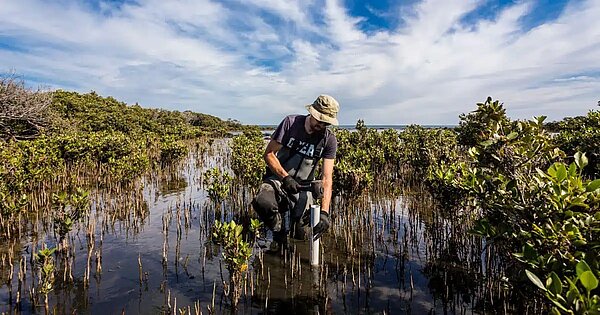
  • Co‑benefits: Carefully chosen NBS projects (e.g. mangrove restoration) can deliver measurable social and ecological impact while aligning with corporate responsibility and investor expectations.


As host countries scale up Article 6 implementation and authorization processes, the supply of eligible credits is expected to increase. However, for the aviation sector, competition and firm compliance deadlines may drive near-term scarcity and price increases. For corporates outside aviation, now is a smart time to engage with carbon markets, gaining experience and securing access before “voluntary” becomes “required.”

Nature Based Solutions: Strategic, Scalable, Compliance-Ready

Nature-based solutions (NBS) do more than remove carbon—they deliver measurable biodiversity, community, and reputational returns. But their real power lies in their strategic role within future carbon markets.

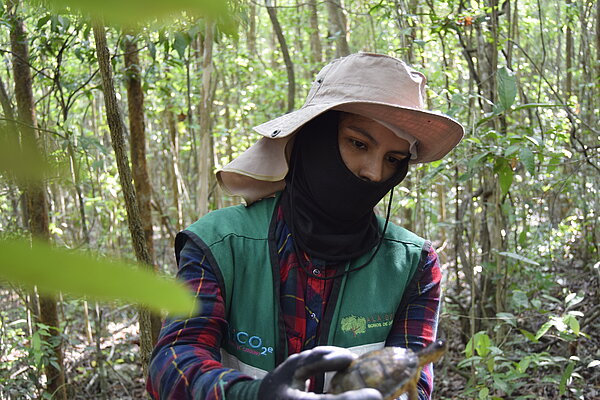
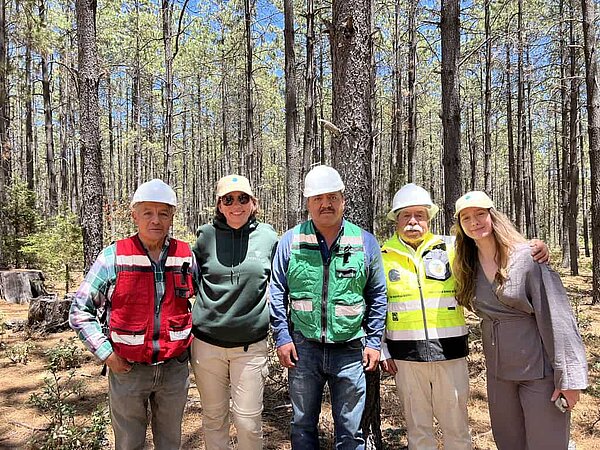
Projects like FORLIANCE’s XiCO₂e: Durango Forest Project in Mexico demonstrate how high-integrity NBS can be structured for alignment with international compliance pathways such as Article 6 and CORSIA. While many countries are still establishing approval systems to authorize credit exports, companies that engage early can help shape demand and unlock project financing.

Accessing these premium markets requires more than robust project design. Companies must understand:

  • Host Country Authorization: Still missing in many nations, but essential for compliance-grade eligibility.
  • Readiness Gaps: Registries, MRV systems, and approval bodies are in development—but not yet mature.
  • Policy Risk: Governments may reserve credits for domestic targets, influencing availability for buyers abroad.
     
    Even so, early offtake agreements and long-term partnerships can accelerate implementation, reduce investment risk, and secure access to high-quality, potentially compliance-eligible supply. For companies navigating future regulatory pressures, investing now—rather than reacting later—can lock in value and leadership.
     
Integrating Voluntary and Compliance: Building Long-Term Resilience

Despite the rise of compliance markets, around 72% of global emissions remain unpriced. For most companies, voluntary climate action remains the most immediate and flexible pathway.

A strategic approach for voluntary buyers today means:

  • Following the mitigation hierarchy: Prioritize internal reductions, then compensate unavoidable emissions with high-quality carbon credits.
  • Engaging early in project development: Supporting or contracting credits early helps secure supply, shape project impact, and build long-term value.
  • Using recognized integrity frameworks for buyers: Initiatives like the VCMI Claims Code of Practice or IETA’s Guidelines for High-Integrity Use of Carbon Credits help ensure voluntary action meets growing stakeholder expectations.

This is not just climate responsibility—it’s risk management. Companies acting now on credible voluntary strategies can reduce long-term exposure to policy shifts, rising credit prices, and supply scarcity as regulation catches up.

FORLIANCE’s Role: A Strategic Partner for Forward-Thinking Buyers

FORLIANCE bridges voluntary and emerging compliance markets by:

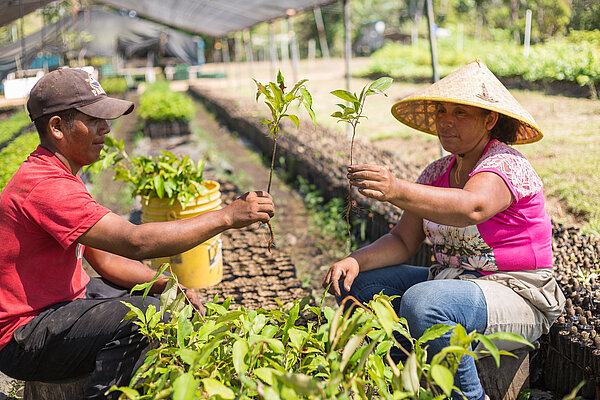
  • Developing high-integrity NBS projects, from reforestation to mangrove restoration, designed to meet the highest environmental and social standards.
  • Staying connected to the pulse of policy developments—through active participation in working groups and partnerships with global market stakeholders (e.g. IETA)—to ensure our clients benefit from the latest market insights.
  • Advising buyers navigating carbon credit strategies, helping align procurement with evolving frameworks like Article 6 or CORSIA, without losing sight of credibility and long-term value.
  • Committed to future-ready supply, with a strong pipeline of projects designed to deliver voluntary impact today—and compliance potential tomorrow.

Our focus: Making carbon credit procurement less risky, more transparent, and strategically aligned with your business needs.
Final Takeaway: Time Is Now—Don’t Wait to Engage

For airlines and other CORSIA-covered companies, timelines are clear and inflexible. With limited compliant supply projected in the near term, early engagement is critical to secure access and manage cost exposure.

For corporates in the voluntary space, the path is equally urgent. Early offtake agreements help de-risk project financing, signal demand, and secure access to high-quality credits—while reinforcing a company’s climate leadership.

Nature-based solutions remain one of the most compelling tools available:

  • Cost-effective mitigation with high integrity
  • Real-world co-benefits for people and ecosystems
  • Flexible use across voluntary and emerging compliance frameworks

If your company is exploring climate action pathways—be it carbon pricing, voluntary compensation, or compliance-aligned sourcing—this is the moment to act. FORLIANCE can help you move from intention to impact, with credibility and strategy in sync.

STAY UPDATED

LATEST NEWS AND INSIGHTS

Project Updates

From Carbon Finance to Community Impact: XiCO2 Progress in Durango

In October 2025, the FORLIANCE team traveled to Durango for an in-depth visit across the ejidos that are part of the …

Learn more
Project Updates

Vichada Regenera: A High-Integrity ARR Investment Opportunity in Colombia

Vichada Regenera is FORLIANCE’s latest large-scale Afforestation, Reforestation, and Revegetation (ARR) initiative and a…

Learn more
Project Updates

Building Equality in Vichada: The Women’s Circle Project

On the edges of Colombia’s vast savannah, women who once saw few prospects are now leading conversations, projects, and…

Learn more

Chickens for San José: How Carbon Finance Makes a Difference on the Ground

The XiCO₂e: Durango Forest Project protects over 270,000 hectares of forest in the Sierra Madre Occidental, but its impact…

Learn more
Climate Strategy & Policy Alliances Statements

EU Climate Policy in Flux: What It Means for Corporate Sustainability Strategy

The EU’s climate policy landscape is shifting rapidly. The Green Claims Directive (GCD) has stalled, the Corporate…
Learn more
Project Updates

From Hurricane Recovery to Climate Action: The XiCO2e Mexican Peninsula Project

In 2007, Hurricane Dean struck the Yucatán Peninsula with winds exceeding 270 km/h, devastating thousands of hectares of…

Learn more
Alliances Project Updates

XICO2e: Climate Impact, Rooted in Mexico

XICO2e is our joint venture with Ala-boOl. It connects companies with high-quality, independently verified forest carbon…

Learn more
Climate Strategy & Policy

The Compliance Shift: Why Smart Companies Turn to Nature-Based Credits

As net-zero targets tighten and carbon pricing mechanisms expand, companies are navigating a shifting compliance landscape.…

Learn more
Climate Strategy & Policy Alliances

The ICROA Code of Best Practice: What It Is and Why It Matters

As an ICROA-approved organization, FORLIANCE is committed to internationally recognized best practices in voluntary carbon…

Learn more
Climate Strategy & Policy

Navigating FLAG and Agricultural GHG Emissions: How Businesses Can Prepare

Land-based emissions from agriculture and forestry are gaining unprecedented importance as companies face growing…

Learn more
Project Updates

What’s Growing in Darién: Forests, Futures, and Verified Climate Impact

In the heart of Panama's Darién province, where rich biodiversity collides with mounting environmental pressures, a bold…

Learn more
Project Updates

Capturing the Life of the Yucatán Jungle: Documenting a Biodiversity Baseline

Dawn breaks in the tropical forests of Quintana Roo, Mexico. A chorus of bird calls echoes through the canopy as shafts of…

Learn more
Alliances

Committed to Climate Integrity through ICROA

Since 2021, FORLIANCE has been a proud member of the International Carbon Reduction and Offsetting Alliance (ICROA),…

Learn more
Project Updates

Key Insights from the Latest Tropical Mix Impact Report

What happens after a 30-year carbon project issues its final credit? The latest Tropical Mix Impact Report reveals how…

Learn more
Climate Strategy & Policy

From Green Claims to Carbon Removals: Navigating New EU Climate Rules for Corporate Climate Action

European climate policy is entering a new era – and corporate climate action leaders need to be prepared. The European…

Learn more
Project Updates

Tropical Mix: A 30-Year Journey of Hope, Forests, and Futures

In 1995, nestled in the heart of Panama, a bold vision took root, one that would grow into a living legacy of reforested…

Learn more
Project Updates

Stopping Fires Before They Spread – XiCO2e Durango’s Forest Protection Strategy

Wildfires are one of the biggest threats to forest ecosystems—and the climate benefits they provide. In the Sierra Madre…

Learn more
Project Updates

How a School Podcast Grew into a Community Bridge

Among the many positive outcomes of the Vichada Climate Reforestation Project, one particularly personal and powerful story…

Learn more
Project Updates

Re-Spire: Restoring Resilience to Germany’s Forests

Climate change is taking a toll on Germany’s forests. The Re-Spire project, launched in 2019, responds with a science-based…

Learn more
Project Updates

Bolsa Común: The Heart of Community-Led Finance in the XiCO2e Durango Project

Developed through a strong alliance between FORLIANCE GmbH, AlaBoOl, and the participating Ejidos, the Bolsa Común…

Learn more
Project Updates

How a Mexican Community Revived Its Mangroves

In the heart of Tabasco, Mexico, a community once faced with environmental degradation is now setting an example for…

Learn more
Climate Strategy & Policy

Mangrove Restoration as a Blue Carbon Solution for Ports and Shipping

Ports and shipping companies are facing mounting pressure to reduce emissions, improve water quality, and meet rising…

Learn more
Project Updates

A Closer Look at the Vichada Carbon Project: Highlights from Our December 2024 Visit

The Vichada Carbon Project is a model for sustainable climate action, blending reforestation, biodiversity protection, and…

Learn more
Expert Interviews

COP29 Kicks Off in Baku: Paving the Way for Decisive Climate Action

FORLIANCE's Astrid Manciu shares insights on the key themes and challenges at COP29.

COP29 starts now, marking the 29th…

Learn more
Expert Interviews

FORLIANCE and Gold Standard Launch Innovative Mangrove Management Methodology with Remote Sensing

FORLIANCE and Gold Standard Launch Innovative Mangrove Management Methodology with Remote Sensing ...

Learn more
Project Updates

Visiting the XiCO2e Durango Forest Project

We recently conducted a field visit to our XiCO2e Durango Forest Project and immersed in a world of sustainability,…

Learn more
Project Updates

Re-Spire Westerwald Achieving Change: Planting Seeds of a Sustainable Future

Situated in the Rhineland-Palatinate region of Germany, the Westerwald is renowned for its scenic beauty, which has…

Learn more
Latest Updates

Launch of Sustainable Mangrove Methodology by FORLIANCE and Gold Standard

FORLIANCE is thrilled to spotlight a significant milestone in our conservation efforts: the development of a groundbreaking…

Learn more
Expert Interviews

COP 28 Outcomes: Expert Insights from FORLIANCE’s Astrid Manciu

In the ongoing battle against climate change, the Conference of the Parties (COP) serves as a critical forum for global…

Learn more
Project Updates

XiCO2e makes history as the first FSC group certified carbon project

Quintana Roo, December 1, 2023. The presence of the Forest Stewardship Council in Mexico dates back to its founding in…

Learn more
Project Updates

Progress in Germany’s First Certified Carbon Project –“Re-Spire“

The advancements of the groundbreaking carbon project, Re-Spire, in the Westerwald region were deliberated this week at…

Learn more
Expert Interviews

What to expect at COP28 – Interview with FORLIANCE CEO Dirk Walterspacher

The COP28 will take place this year from 30 November to 12 December 2023 at Expo City in Dubai, United Arab Emirates (UAE).…

Learn more
Alliances

A road to climate action: Interview with the Head of Sustainability at Autobahn GmbH

Autobahn GmbH has set itself ambitious goals in terms of environmental protection and social responsibility. FORLIANCE…

Learn more
Project Updates

Safeguarding Colombia’s natural treasures and empowering communities

Back in 2018, FORLIANCE joined forces with four Colombian organizations to compete for an international tender. Winning the…

Learn more
Alliances

Determined football players are on the forefront of climate advocacy

Real change and effective commitment to improving our ecological future will only happen when we’re all on board. Morten…

Learn more
Project Updates

Auditing the XiCO2e Project in Southeastern Mexico

In a significant stride towards sustainable forest management and climate change mitigation, our Improved Forest Management…

Learn more
Alliances

Learn how the passion for football can restore tropical forests

Addressing climate change is a collective responsibility. It requires immediate collaborative efforts to find sustainable…

Learn more
Project Updates

Norteak Group’s Reforestation Project in Nicaragua: A model for ecological connectivity and social responsibility

Step into the lush green forests of Nicaragua, where a groundbreaking project is restoring degraded grasslands through…

Learn more
Climate Strategy & Policy

Understanding the Latest ESG Policy Changes: What You Need to Know

Environmental, Social, and Governance (ESG) criteria have become an increasingly critical aspect of investing and corporate…

Learn more
Climate Strategy & Policy

Why Investing in Sustainability is a Smart Business Move

In today’s world, investing in sustainability is no longer just a matter of social responsibility – it’s also a smart…

Learn more
Project Updates

How Indigenous Knowledge and Community Partnerships are Key to Climate Forestry

Julian Ekelhof, Climate Solutions Senior Director at FORLIANCE, recently visited the XiCoe project area in the Durango…

Learn more
Project Updates

Ivory Coast forest restoration project

The forest restoration project in the Ivory Coast is developing in great strides. Our Nature Based Solutions Senior…

Learn more
Project Updates

Caribbean and Pacific, two regions, united by the dream and power of conservation

In terrestrial, marine and coastal ecosystems of the Caribbean and Pacific of Colombia, FORLIANCE together with four…

Learn more
Latest Updates

Methodology for Biochar Utilization in Soil and Non-Soil Applications is Verra Approved

Learn more
Project Updates

Reddes Locales – Sustainable community forest management in Guatemala

Community forestry has existed in Guatemala since ancient times. Forests and trees have always been part of local…

Learn more
Statements

ICROA’s response to Financial Times article on the voluntary carbon market

As ICROA accredited organization FORLIANCE works side by side with all ICROA accredited carbon management and offset…

Learn more
Project Updates

XiCO – Protecting forests and empowering local Ejidos

FORLIANCE is developing a community-based forestry project. Together with our partner AlaBoOL, we are working on improving…

Learn more
Alliances Project Updates

Making sustainable chocolate the norm – forest restoration in Côte d’Ivoire with Barry Callebaut

Barry Callebaut is committed to make sustainable chocolate the norm by 2025, which includes a commitment to be forest and…

Learn more
Project Updates

10-year Sodo and Humbo project anniversary with World Vision Australia

Over the past ten years of cooperation between World Vision Australia and FORLIANCE, we’ve marked multiple milestones…

Learn more
Project Updates

Re-Spire launched its Carbon Sales

FORLIANCE and Salm – Salm & Partner’s joint venture Re-Spire is entering its next phase.

Learn more
Alliances

Making football carbon neutral – VfL Wolfsburg opens up about the football club’s climate journey

Recent climate reports show that we urgently need to step up our efforts to mitigate climate change. We are already seeing…

Learn more
Latest Updates

FORLIANCE at the COP26 Action Hub presenting Blue Carbon

The COP26 is an important milestone in our journey towards reaching net-zero by mid-century and our battle against the…

Learn more
Latest Updates

FORLIANCE is ICROA approved

We are extremely honoured to announce that FORLIANCE is now approved by ICROA! As new ICROA Approved Organisation we are…

Learn more
Latest Updates

FORLIANCE is developing a Sustainable Mangrove Management Methodology together with Gold Standard

Mangroves belong to the world’s most essential ecosystems and yet they have long been one of the earth’s most threatened…

Learn more
Project Updates

Bringing high-quality climate protection initiatives to Germany

Over the past 20 years, FORLIANCE has assisted over 1,500 companies to navigate and operate in the international carbon…

Learn more
Alliances Project Updates

FORLIANCE is supporting Rewilding Europe in making Europe a wilder place

We are supporting Rewilding Europe in making Europe a wilder place, with more space for wild nature, wildlife and natural…

Learn more
Latest Updates

New year, new look, continued commitment for climate action

We are excited to operate under our new company name FORLIANCE! Empowered by the changes around us and our growing team we…

Learn more
Statements

We need all hands on deck – Comment on the DER SPIEGEL article „Das Millionengeschäft mit den Klimabäumen“

The German weekly SPIEGEL published in a recent edition an article reporting that planting trees and building forests to…

Learn more
Latest Updates

Development of new GHG accounting methodology for biochar

A consortium of experts including FORLIANCE, BiocharWorks and South Pole has been selected by Verra to help develop a…

Learn more