On the Ground at Re-Spire: Protecting Germany’s Forests
Alona Mikhova
May 26, 2026
Project Updates
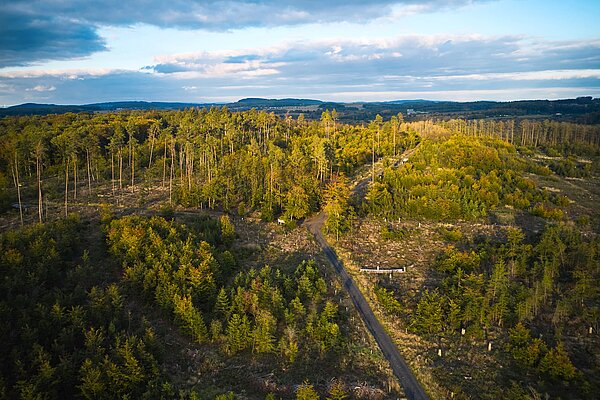
When you look down at the forest floor of the Re-Spire Westerwald project in Germany’s historic Westerwald region, the future of European nature-based solutions comes into sharp focus. Right there, pushing through the soil, is a vibrant green oak sapling. A few meters away, a young beech.
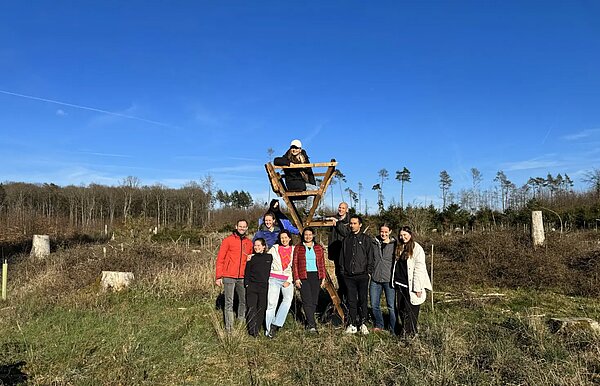
Our team recently spent time on-site at the Re-Spire Westerwald project to check on the health of these newly established stands and formally activate our long-term ecosystem monitoring framework. We went to track empirical growth metrics and ensure that this landscape is actively guarded for its century-long transition into a robust carbon sink.
Here is how the Re-Spire project is utilizing silvicultural engineering to design high-integrity, biodiverse carbon assets capable of withstanding the next hundred years.
The Strategy: Silvicultural Engineering and Climate-Resilient Species
The foundation of a permanent carbon sink lies in its genetic and structural diversity. Moving completely away from historical, single-species timber plantations, the Re-Spire Westerwald project introduces a biodiverse matrix of around 20 climate-adapted, deep-rooted native tree species.
“What we are creating here is not a forest for the next few years, but for future generations,” explains Bernhard Kloft, local forester supporting the project. “Diversity is the key to building forests that can better withstand drought, heat, and future climate extremes.”
By anchoring the design around sessile oak (Quercus petraea) and European beech (Fagus sylvatica), the forest is optimized to deliver multiple ecosystem services simultaneously:
- Microclimate Optimization: Broadleaf trees create a dense, multi-layered canopy. By maximizing shade and releasing moisture through evapotranspiration, this new forest structure actively lowers forest-floor temperatures and retains critical soil moisture during peak summer droughts.
- Functional Biodiversity Restoration: Reintroducing native tree varieties establishes the necessary habitats and soil conditions for native insects, birds, and soil microorganisms to return to the landscape, systematically reversing previous ecological degradation.
- Hydrological Control and Soil Retention: The interlocking, deep-penetrating root networks of our new native mix act as natural underground anchors. This mechanical stabilization protects exposed mountain slopes from topsoil erosion and mass wasting during heavy precipitation events.
For the local communities, the Re-Spire project is not only a technical forest restoration initiative, but also a visible response to the changes already affecting the region.
“The damage in our forests has been impossible to ignore in recent years,” says Dennis Liebenthal, Mayor of Girod. “Projects like Re-Spire make climate action tangible because people can directly see how damaged forest areas are being restored.”
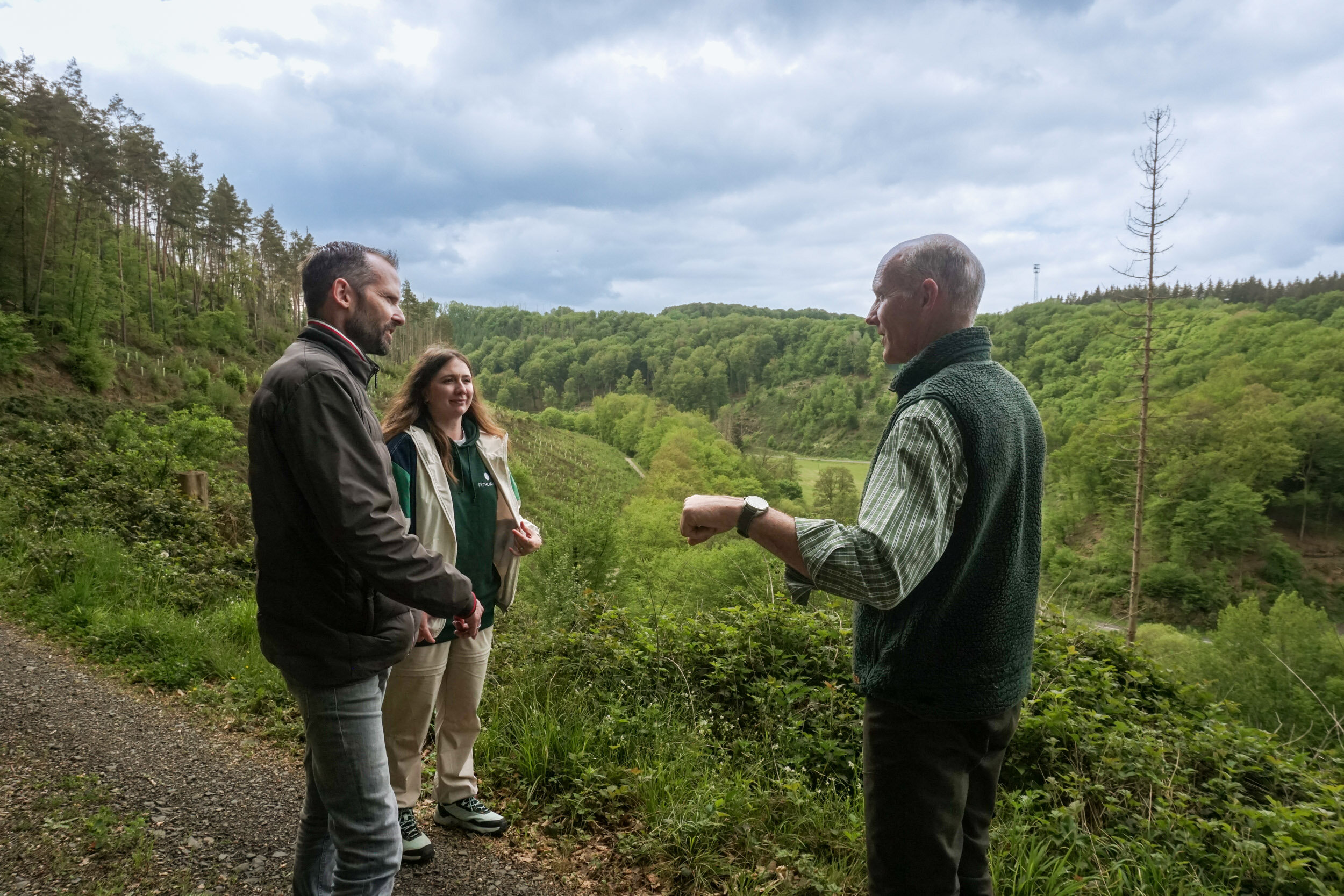
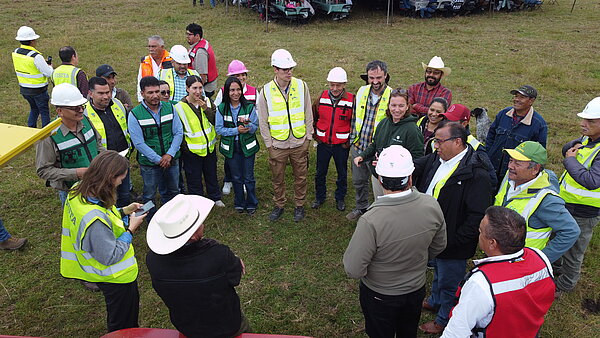
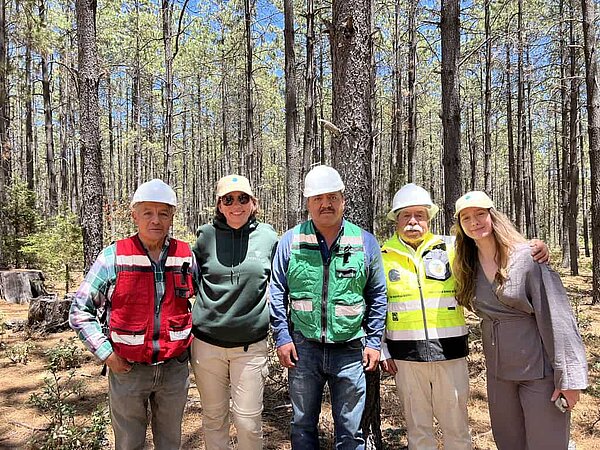
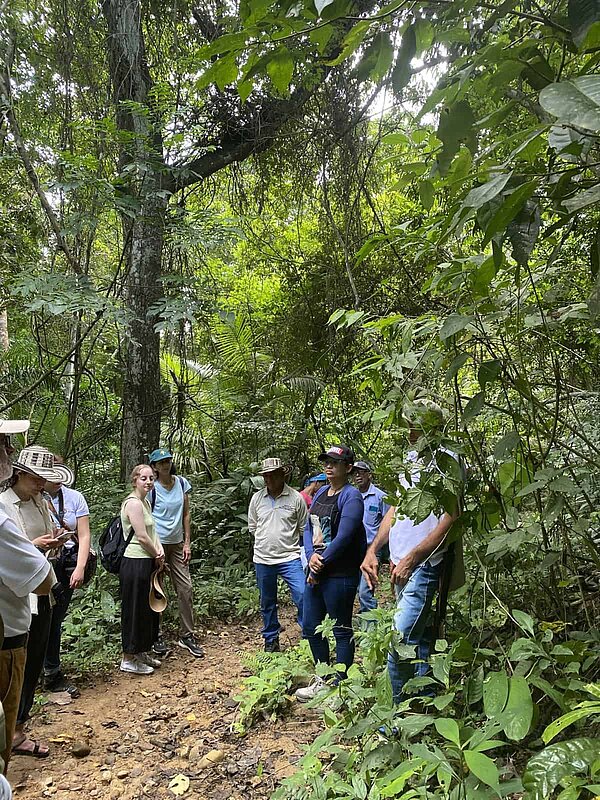
On site at Re-Spire Westerwald: Bernhard Kloft, Forester and Dennis Liebenthal, Mayor of Girod, share local perspectives on forest restoration and climate resilience.
Operational Risk Mitigation: Why Continuous Forest Management is Required
A recovering ecosystem naturally invites wildlife back, which is a positive indicator of ecological recovery—but it introduces specific operational variables that require active, long-term management. During our site audit across the Re-Spire Westerwald project area, our team documented significant deer activity across the project sectors.
During the spring and summer, male deer experience a natural instinct known as fraying. To mark territory and rub the velvet off their new antlers, they instinctively scrape against young, flexible tree trunks. Left unmanaged, this behavior strips the bark, girdles the tree, and causes high sapling mortality in minutes.
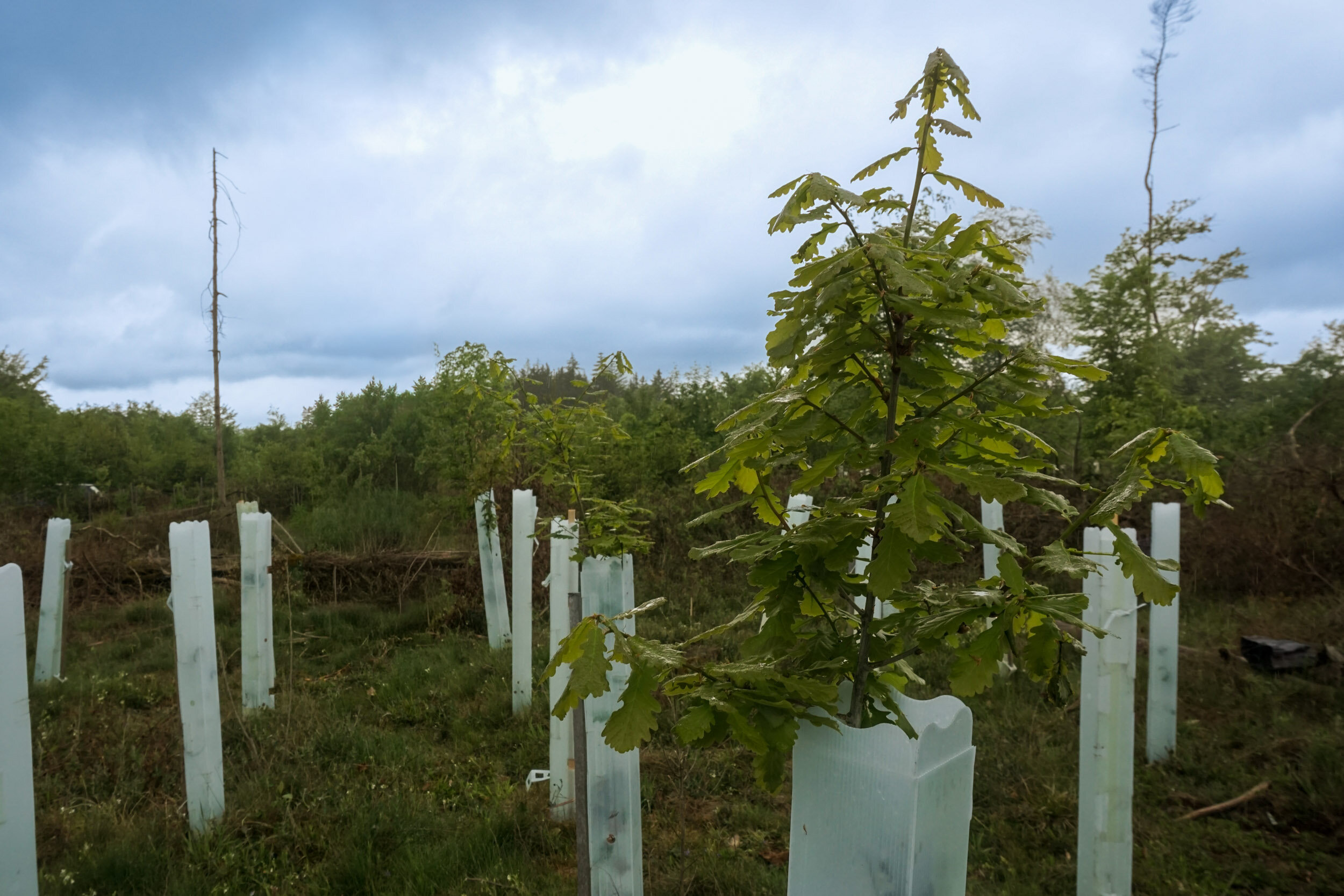
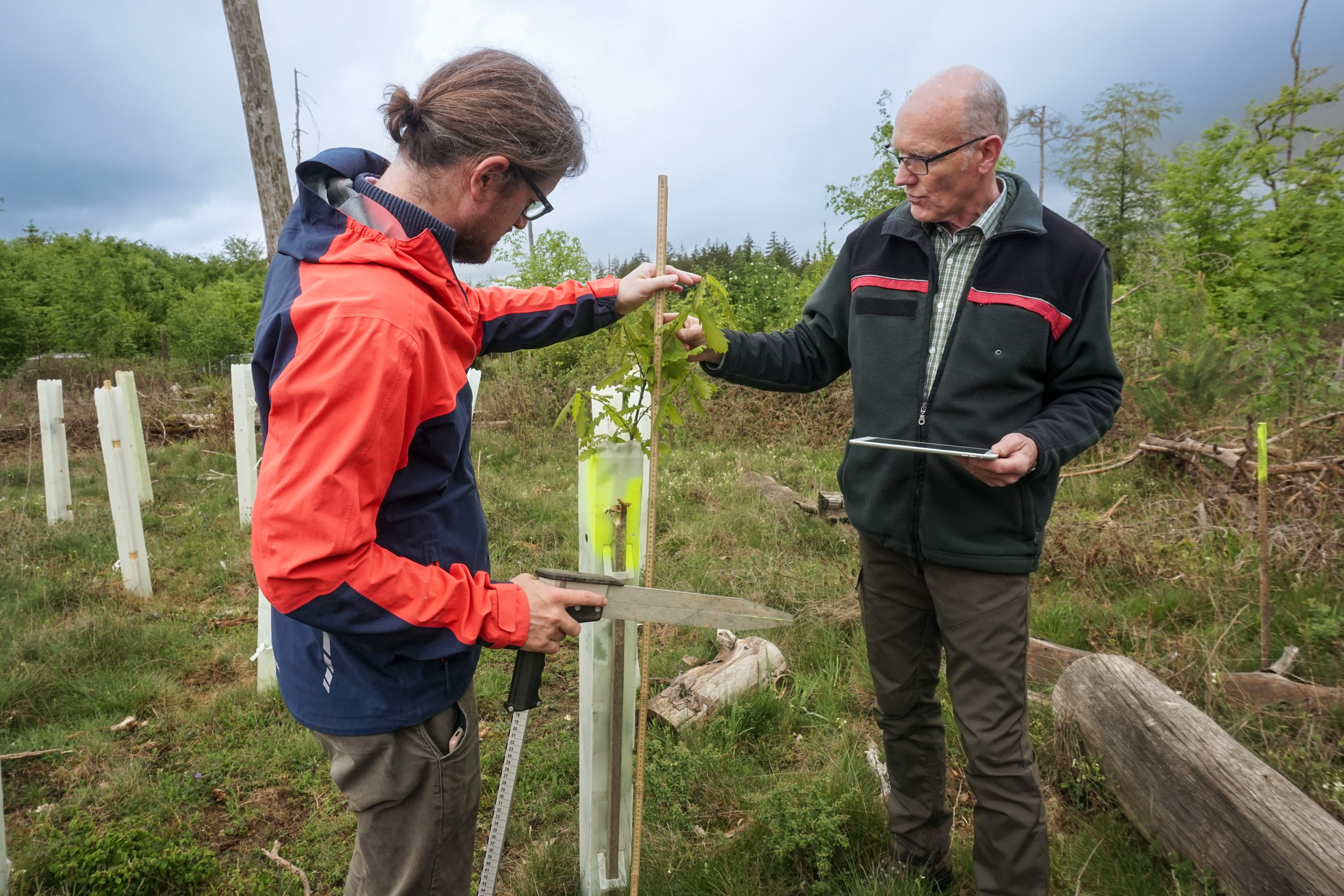
Young saplings at the Re-Spire Westerwald project are protected with individual tree guards to reduce deer browsing and antler fraying during the critical early years of forest establishment.
This is precisely why a “plant-and-forget” approach to carbon projects fails, and why continuous forest management is mandatory. To safeguard our partners’ capital allocation and ensure high stand-establishment rates, our operational framework includes:
- Active Guardianship: Deploying robust, physical tree guards and strategic fencing across vulnerable sectors.
- Routine Maintenance: Continuous on-site inspections by local foresters to repair protections and manage competing vegetation.
- Adaptive Silviculture: Monitoring wildlife patterns to adjust protection measures over the first critical decade of growth until the trunks reach structural maturity.
“To establish stable forests under changing climate conditions, continuous management is essential,” says Bernhard Kloft. “Young forests are particularly vulnerable in the first years. They need protection, monitoring, and the ability to adapt management measures when conditions change.”
Ground-Truthing: True Transparency for Buyers
We believe that true environmental integrity cannot be managed via desktop modeling or remote sensing alone. Rigorous field-level ground-truthing remains the gold standard for risk mitigation and permanence verification in the voluntary carbon market.
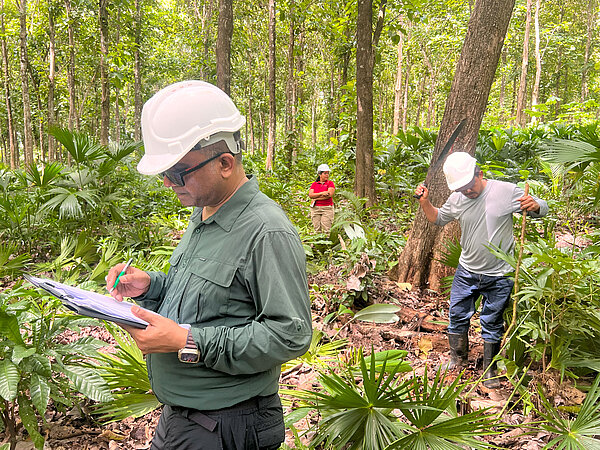
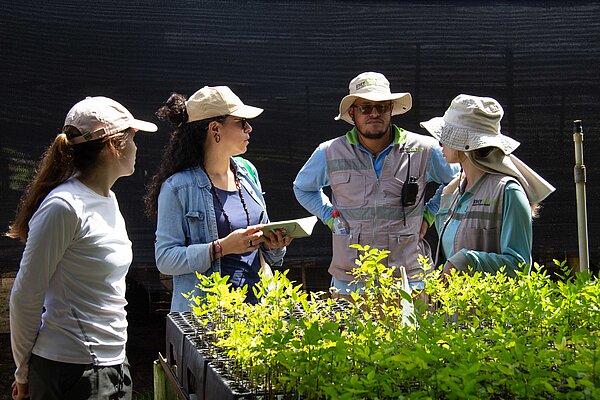
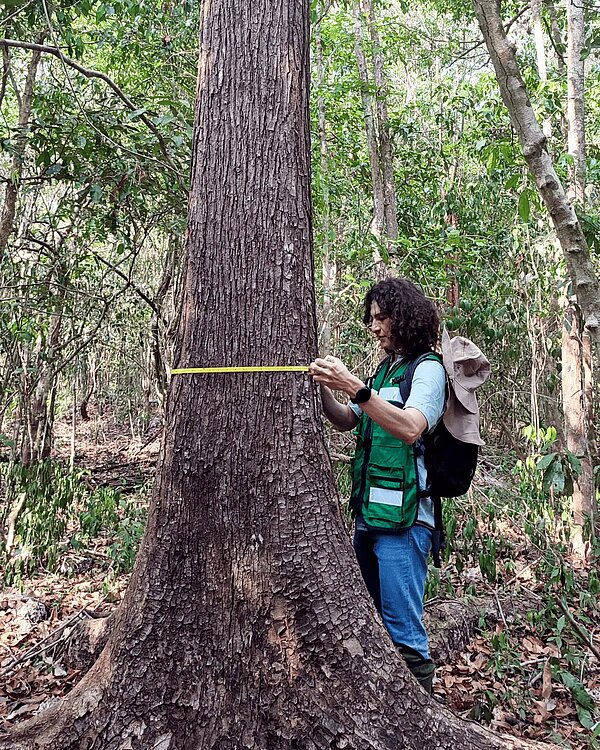
During this site visit, our team established permanent sample plots within the Re-Spire project territory to initiate our continuous data collection program. By physically measuring the trees and auditing these designated plots, we are actively tracking:
- Sapling survival rates across distinct micro-topographies to optimize ongoing planting and density strategies.
- Biomass accumulation metrics to calculate exact, verifiable forest growth and carbon absorption year over year.
- Soil organic carbon (SOC) stability to track and secure long-term carbon storage within the earth itself.
Securing direct, long-term alignment with local forestry offices and municipal mayors ensures that this data collection is seamlessly integrated into local governance and protected by regional land-use laws for decades to come.
For Harald Quirmbach, Mayor of Großholbach, this long-term perspective is central to the value of the project: “We are not only investing in forests here, we are investing in the future of our communities and future generations. Re-Spire shows that regional climate action can create visible impact directly on the ground.”
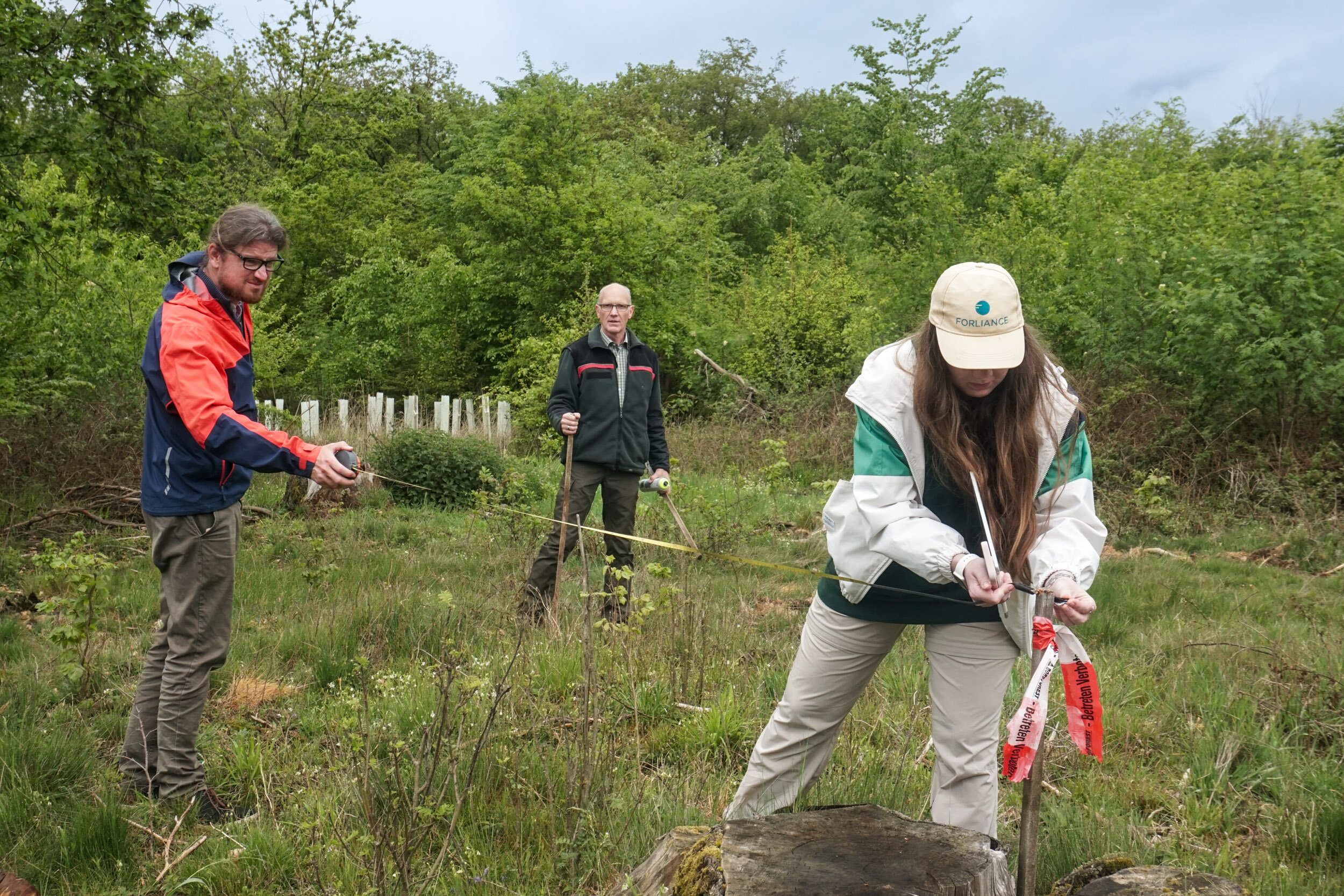
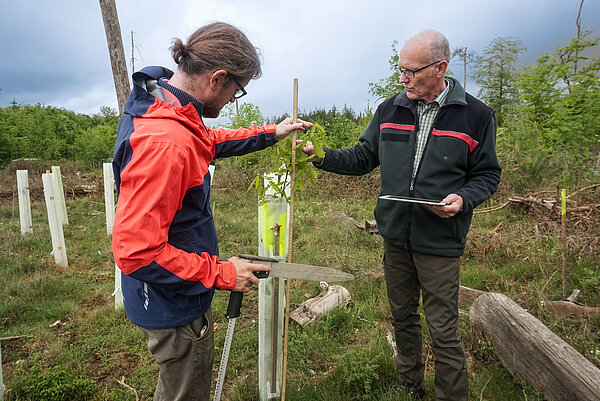
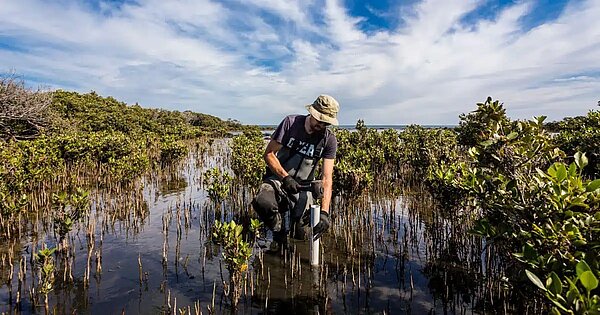
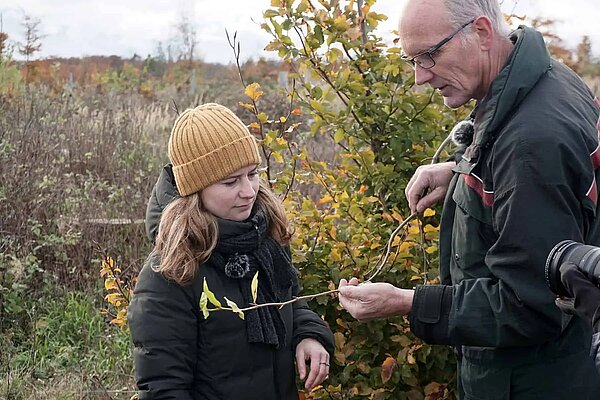
On-site monitoring at Re-Spire Westerwald: FORLIANCE’s Konrad Hentze, Alona Mikhova and forester Bernhard Kloft measure young trees in permanent sample plots to track survival rates, biomass growth, and long-term forest development.
A Living Legacy
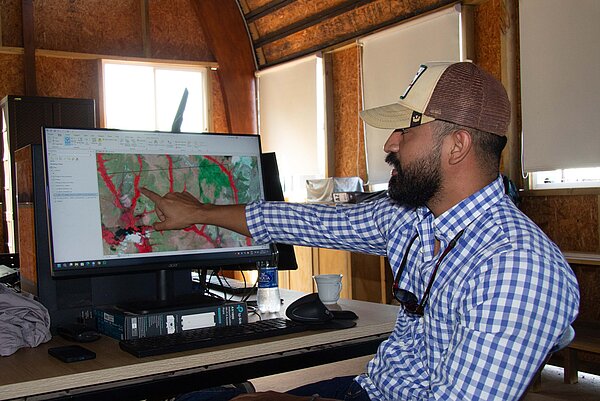
Reforestation assets require systematic oversight throughout their decades-long lifecycle. Through our integrated monitoring program, combining hands-on field sampling with high-resolution drone photogrammetry, we maintain continuous, auditable oversight of the forest’s health.
For forward-thinking corporations seeking high-integrity, domestic nature-based solutions within Europe, the Re-Spire Westerwald project offers a transparent, legally secure asset. Rather than purchasing generic, unverified offsets, partners receive dynamic, data-backed updates on the exact block of resilient forest they help fund.
This direct connection between companies, local communities, and measurable forest development is one of the defining strengths of the Re-Spire project. It turns climate action from an abstract commitment into a concrete, monitored, and locally embedded investment in resilience.
“Climate action does not start somewhere far away, it starts right on our own doorstep,” says Dennis Liebenthal, Mayor of Girod. “That is what makes initiatives like Re-Spire so important for our region.”
We have established the local political infrastructure, deployed the scientific framework, and activated on-site monitoring. We invite you to partner with us in building Europe’s most resilient climate shields of tomorrow.
To learn more about the Re-Spire project, view insights from our recent site visit, or discover how your company can directly support German forest resilience, please reach out to our team today.

About the Author
Alona Mikhova, Project Portfolio & Commercialization Manager at FORLIANCE
Alona Mikhova is a Project Portfolio Specialist and Commercialization Manager at FORLIANCE, with over a decade of sustainability expertise and five years in the carbon sector. She translates complex project information into credible communications, supports due diligence and corporate net-zero strategies, and connects teams to deliver value for companies, biodiversity, and local communities.