SBTi 2.0: A More Realistic Path to Net Zero, or a More Complex One?

September 24, 2026
Climate Strategy & Policy

The release of the Science Based Targets initiative (SBTi)'s Corporate Net-Zero Standard Version 2.0 marked the most significant evolution of the framework since its launch in 2021. Rather than focusing solely on target setting, the new standard shifts attention toward implementation, accountability, and the practical realities companies face when pursuing net-zero commitments

For sustainability leaders, the key question is no longer whether SBTi remains the leading corporate climate framework. It is whether Version 2.0 can accelerate real-world decarbonization at a time when many companies are struggling to translate ambition into action.

From Target Setting to Delivery

One of the strongest aspects of SBTi 2.0 is its recognition that climate transitions rarely follow a linear path. The introduction of a "best-efforts" framework acknowledges that companies may face barriers such as technology limitations, supply chain constraints, or lack of available low-carbon solutions. Rather than excluding companies that miss interim targets, SBTi now allows them to remain within the framework if they can demonstrate transparent efforts and disclose implementation challenges

This change is important.

Many companies have struggled with factors outside their direct control, including slow technological development, limited availability of low-carbon materials, uncertain renewable energy infrastructure, and complex Scope 3 supply chains. Punishing companies for these realities risked creating a binary system where organizations either succeeded perfectly or abandoned the framework altogether.

This evolution strengthens the credibility of climate action by focusing on continuous progress rather than creating a binary pass-or-fail system. However, the success of this approach will depend heavily on how the forthcoming assurance framework defines what constitutes genuine "best efforts." If requirements are too loose, credibility may suffer. If they are overly restrictive, companies could continue facing the same barriers that discouraged participation under previous versions.

The Most Important Shift: Carbon Credits Enter the Conversation

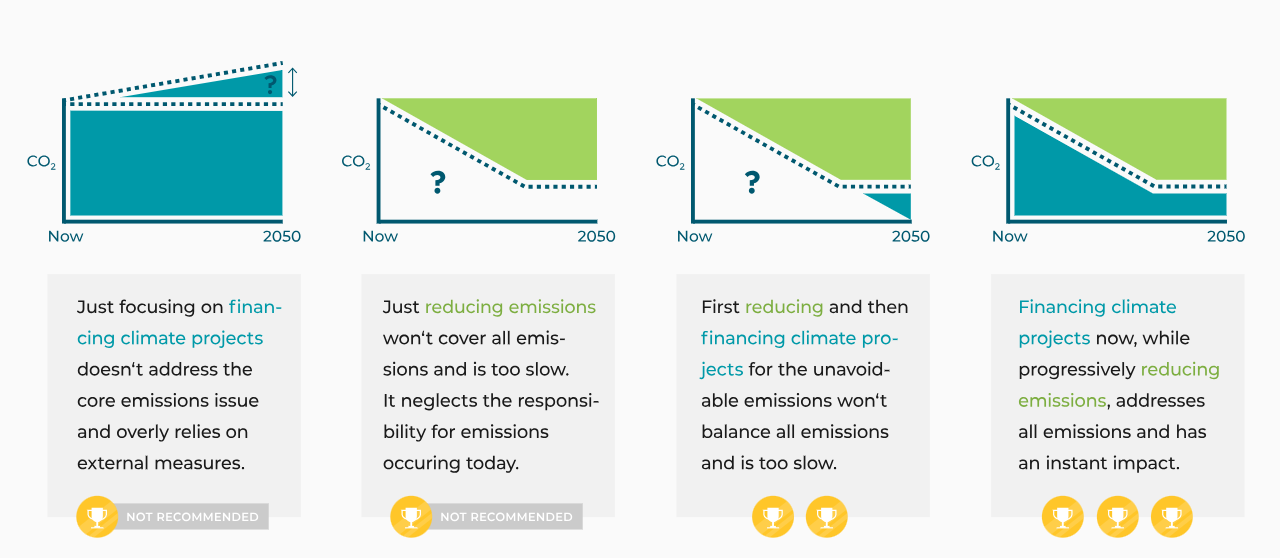
Perhaps the most consequential development is SBTi's new Ongoing Emissions Responsibility (OER) framework. While emissions reductions remain the priority, the standard now formally recognizes the role of climate finance and carbon crediting in addressing emissions that companies continue to generate during their transition.

This is an important signal for the market.

Reducing emissions and financing climate action should be complementary strategies, not mutually exclusive choices.

For years, the climate debate has often framed emissions reductions and carbon credits as competing approaches. SBTi 2.0 takes a more pragmatic position: companies need both. Internal decarbonization remains essential, but financing mitigation and removal activities outside the value chain can also contribute to limiting global warming while companies continue their transition.

The new OER recognition system introduces three participation levels, ranging from "Engaged" to "Leadership," creating a pathway for companies to support climate action long before their net-zero year arrives.
Why Early Carbon Market Engagement Matters

While the inclusion of carbon credits is a positive step, there is a challenge that deserves far greater attention.

SBTi 2.0 creates a pathway that is likely to increase future demand for both mitigation and removal credits, particularly as the mandatory removal requirements for larger companies begin after 2035 and progressively increase toward net-zero target years

Yet there remains an unresolved question:

Will sufficient high-quality supply exist when that demand materializes?

The carbon market has repeatedly experienced periods where demand signals arrived too late to stimulate project development at the scale required. High-integrity nature-based projects, engineered removals, and durable carbon removal technologies often require years of development, permitting, financing, monitoring systems, and operational scaling.

Waiting until compliance-like demand emerges may prove risky.

A reasonable interpretation of SBTi 2.0 is that companies should begin engaging with carbon markets much earlier than the standard strictly requires. Early participation can:

  • Support project development today.
  • Improve future supply security.
  • Generate learning and organizational capability.
  • Help companies understand quality distinctions across carbon assets.
  • Reduce future exposure to price volatility.

In other words, if companies believe removals will eventually become a strategic necessity, delaying engagement until the 2030s may be economically and operationally suboptimal.

The market needs demand signals before it needs credits.

A Standard Designed to Broaden Participation

Another major innovation is the introduction of differentiated requirements for large corporations and smaller businesses. By creating separate categories, SBTi aims to reduce barriers for SMEs and companies in emerging markets that have historically been underrepresented in science-based target-setting.

This could significantly increase participation as before, smaller companies have been underrepresented in science-based target initiatives because the financial and technical burden of compliance can be significant. Lowering barriers may substantially increase participation among organizations that previously viewed SBTi as unattainable.

However, it may also create a different challenge. Category A companies face more extensive requirements related to Scope 3 emissions, reporting, assurance, transition planning, and future OER obligations.

While these requirements improve rigor, they also increase complexity and cost. As organizations navigate overlapping frameworks such as CSRD, ISSB, and other climate disclosure regulations, some companies may question whether the benefits of SBTi validation remain sufficient to justify the additional effort.

The long-term success of Version 2.0 will therefore depend on whether companies perceive participation not only as a sustainability exercise, but as a source of risk management, competitive advantage, and investor credibility.

This creates an important strategic question:

Are the incentives strong enough to offset the growing complexity?

SBTi recognition remains valuable, but many companies now face multiple reporting frameworks, limited sustainability budgets, and increasing scrutiny regarding implementation costs.

The long-term success of Version 2.0 may depend less on scientific rigor and more on whether companies clearly perceive commercial, risk management, financing, and reputational benefits from participation.

What This Means for Carbon Markets

Perhaps the most important takeaway is that SBTi 2.0 is no longer simply a target-setting standard.

Market observers have noted that even achieving the entry-level OER recognition threshold could bring thousands of new buyers into voluntary carbon markets, while the longer-term removal requirements may become a powerful catalyst for investment in high-quality removals.

Yet demand alone will not solve the challenge. The market will need sufficient volumes of credible, high-integrity projects, particularly removals, to meet future corporate needs.

For project developers, carbon suppliers, and climate solution providers, the opportunity may therefore lie less in selling credits and more in helping companies build long-term carbon procurement, removal, and climate contribution strategies. 

Final Thoughts

SBTi Corporate Net-Zero Standard 2.0 should not be viewed as a weakening of corporate climate ambition. Rather, it reflects a growing recognition that the path to net-zero is more complex than originally anticipated.

The framework's greatest strength may be its acceptance that companies need multiple tools to contribute meaningfully to climate goals: direct reductions, supply chain engagement, clean energy procurement, transition planning, and climate finance through high-integrity carbon markets.

For carbon markets, the most important takeaway may be that the future demand story is becoming clearer. The uncertainty is no longer whether companies will eventually need carbon removals and climate contributions. The uncertainty is whether enough organizations will engage early enough to help build the supply required for a credible net-zero economy. 
STAY UPDATED

LATEST NEWS AND INSIGHTS

Climate Strategy & Policy

SBTi 2.0: A More Realistic Path to Net Zero, or a More Complex One?

The release of the Science Based Targets initiative (SBTi)'s Corporate Net-Zero Standard Version 2.0 marked the most…

Learn more
Project Updates

After 200 Years, European Bison Return to the Făgăraș Mountains

Almost 200 years after disappearing from the Făgăraș Mountains, European bison are roaming the landscape again. Behind…

Learn more
Project Updates

Nature Responds: 202 New Wildlife Records Reveal Vichada's Biodiversity Comeback

Ecological restoration is a long game. It takes years of consistent work before nature starts to show its hand, and when it…

Learn more
Expert Interviews Project Updates

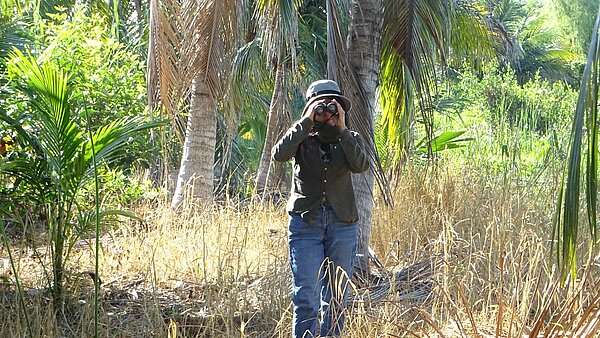
A field biologist on mangrove biodiversity monitoring in Mexico

What does it take to understand whether a restored mangrove is truly recovering? Field biologist Elder Ruiz Velásquez takes…

Learn more
Project Updates

105 Species and Counting: The Life of Úrsulo Galván's Mangroves

In the wetlands of Tabasco, the Mangrove Restoration Mexico project has just reached a milestone that reframes what this…

Learn more
Project Updates

Building a Brighter Future: Transforming Rural Education in Colombia

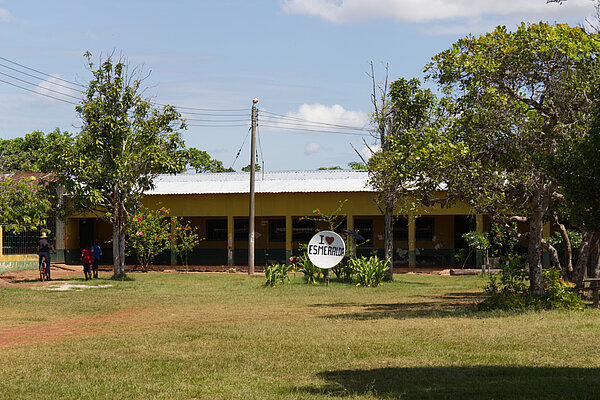
The Vichada Climate Reforestation Project, located in Colombia's remote Orinoco River Basin, demonstrates how high-quality…

Learn more
Project Updates

On the Ground at Re-Spire: Protecting Germany’s Forests

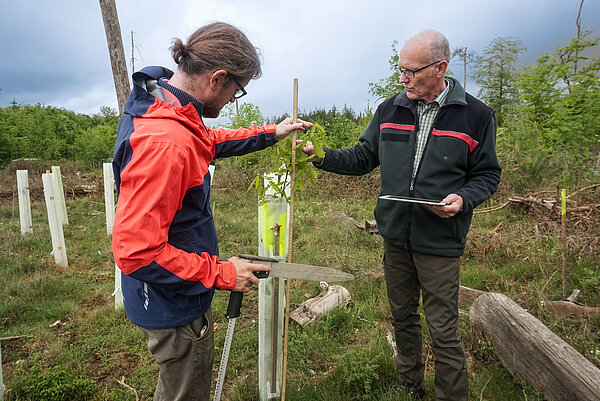
Our team recently spent time on-site at the Re-Spire Westerwald project to check on the health of these newly established…

Learn more
Statements Latest Updates

FORLIANCE announces appointments to leadership team

FORLIANCE today announces the appointment of Marco Magini as Chief Executive Officer and Laura McCormack-Waldschmidt as…

Learn more
Climate Strategy & Policy

FLAG Guidance v1.2 & LSR Standard Explained for Corporate Climate Strategies

The release of the updated FLAG Guidance v1.2 and the Land Sector and Removals (LSR) Standard marks a significant shift in…

Learn more

Through “the Eyes of the Jungle”: A Community Biodiversity Photo Contest in Mexico

In 2025, the XiCO₂e: Mexican Peninsula Forest Project introduced Los Ojos de la Selva, translated as “The Eyes of the…

Learn more
Climate Strategy & Policy

What Companies Need to Know About the New SBTi Corporate Net-Zero Standard v2

The global net-zero landscape is shifting, and so are expectations for corporate climate action. With the second…

Learn more
Project Updates

From Carbon Finance to Community Impact: XiCO2 Progress in Durango

In October 2025, the FORLIANCE team traveled to Durango for an in-depth visit across the ejidos that are part of the …

Learn more
Project Updates

Vichada Regenera: A High-Integrity ARR Investment Opportunity in Colombia

Vichada Regenera is FORLIANCE’s latest large-scale Afforestation, Reforestation, and Revegetation (ARR) initiative and a…

Learn more
Project Updates

Building Equality in Vichada: The Women’s Circle Project

On the edges of Colombia’s vast savannah, women who once saw few prospects are now leading conversations, projects, and…

Learn more

Chickens for San José: How Carbon Finance Makes a Difference on the Ground

The XiCO₂e: Durango Forest Project protects over 270,000 hectares of forest in the Sierra Madre Occidental, but its impact…

Learn more
Climate Strategy & Policy Alliances Statements

EU Climate Policy in Flux: What It Means for Corporate Sustainability Strategy

The EU’s climate policy landscape is shifting rapidly. The Green Claims Directive (GCD) has stalled, the Corporate…
Learn more
Project Updates

From Hurricane Recovery to Climate Action: The XiCO2e Mexican Peninsula Project

In 2007, Hurricane Dean struck the Yucatán Peninsula with winds exceeding 270 km/h, devastating thousands of hectares of…

Learn more
Alliances Project Updates

XICO2e: Climate Impact, Rooted in Mexico

XICO2e is our joint venture with Ala-boOl. It connects companies with high-quality, independently verified forest carbon…
Learn more
Climate Strategy & Policy

The Compliance Shift: Why Smart Companies Turn to Nature-Based Credits

As net-zero targets tighten and carbon pricing mechanisms expand, companies are navigating a shifting compliance landscape.…

Learn more
Climate Strategy & Policy Alliances

The ICROA Code of Best Practice: What It Is and Why It Matters

As an ICROA-approved organization, FORLIANCE is committed to internationally recognized best practices in voluntary carbon…

Learn more
Climate Strategy & Policy

Navigating FLAG and Agricultural GHG Emissions: How Businesses Can Prepare

Land-based emissions from agriculture and forestry are gaining unprecedented importance as companies face growing…

Learn more
Project Updates

What’s Growing in Darién: Forests, Futures, and Verified Climate Impact

In the heart of Panama's Darién province, where rich biodiversity collides with mounting environmental pressures, a bold…

Learn more
Project Updates

Capturing the Life of the Yucatán Jungle: Documenting a Biodiversity Baseline

Dawn breaks in the tropical forests of Quintana Roo, Mexico. A chorus of bird calls echoes through the canopy as shafts of…

Learn more
Alliances

Committed to Climate Integrity through ICROA

Since 2021, FORLIANCE has been a proud member of the International Carbon Reduction and Offsetting Alliance (ICROA),…

Learn more
Project Updates

Key Insights from the Latest Tropical Mix Impact Report

What happens after a 30-year carbon project issues its final credit? The latest Tropical Mix Impact Report reveals how…

Learn more
Climate Strategy & Policy

From Green Claims to Carbon Removals: Navigating New EU Climate Rules for Corporate Climate Action

European climate policy is entering a new era – and corporate climate action leaders need to be prepared. The European…

Learn more
Project Updates

Tropical Mix: A 30-Year Journey of Hope, Forests, and Futures

In 1995, nestled in the heart of Panama, a bold vision took root, one that would grow into a living legacy of reforested…

Learn more
Project Updates

Stopping Fires Before They Spread – XiCO2e Durango’s Forest Protection Strategy

Wildfires are one of the biggest threats to forest ecosystems—and the climate benefits they provide. In the Sierra Madre…

Learn more
Project Updates

How a School Podcast Grew into a Community Bridge

Among the many positive outcomes of the Vichada Climate Reforestation Project, one particularly personal and powerful story…

Learn more
Project Updates

Re-Spire: Restoring Resilience to Germany’s Forests

Climate change is taking a toll on Germany’s forests. The Re-Spire project, launched in 2019, responds with a science-based…

Learn more
Project Updates

Bolsa Común: The Heart of Community-Led Finance in the XiCO2e Durango Project

Developed through a strong alliance between FORLIANCE GmbH, AlaBoOl, and the participating Ejidos, the Bolsa Común…

Learn more
Project Updates

How a Mexican Community Revived Its Mangroves

In the heart of Tabasco, Mexico, a community once faced with environmental degradation is now setting an example for…

Learn more
Climate Strategy & Policy

Mangrove Restoration as a Blue Carbon Solution for Ports and Shipping

Ports and shipping companies are facing mounting pressure to reduce emissions, improve water quality, and meet rising…

Learn more
Project Updates

A Closer Look at the Vichada Carbon Project: Highlights from Our December 2024 Visit

The Vichada Carbon Project is a model for sustainable climate action, blending reforestation, biodiversity protection, and…

Learn more
Expert Interviews

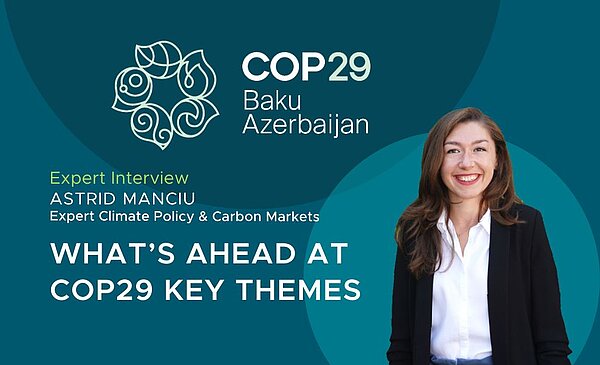
COP29 Kicks Off in Baku: Paving the Way for Decisive Climate Action

FORLIANCE's Astrid Manciu shares insights on the key themes and challenges at COP29.

COP29 starts now, marking the 29th…

Learn more
Expert Interviews

FORLIANCE and Gold Standard Launch Innovative Mangrove Management Methodology with Remote Sensing

FORLIANCE and Gold Standard Launch Innovative Mangrove Management Methodology with Remote Sensing ...

Learn more
Project Updates

Visiting the XiCO2e Durango Forest Project

We recently conducted a field visit to our XiCO2e Durango Forest Project and immersed in a world of sustainability,…

Learn more
Project Updates

Re-Spire Westerwald Achieving Change: Planting Seeds of a Sustainable Future

Situated in the Rhineland-Palatinate region of Germany, the Westerwald is renowned for its scenic beauty, which has…

Learn more
Latest Updates

Launch of Sustainable Mangrove Methodology by FORLIANCE and Gold Standard

FORLIANCE is thrilled to spotlight a significant milestone in our conservation efforts: the development of a groundbreaking…

Learn more
Expert Interviews

COP 28 Outcomes: Expert Insights from FORLIANCE’s Astrid Manciu

In the ongoing battle against climate change, the Conference of the Parties (COP) serves as a critical forum for global…

Learn more
Project Updates

XiCO2e makes history as the first FSC® group certified carbon project

Quintana Roo, December 1, 2023. The presence of the Forest Stewardship Council® in Mexico dates back to its founding in…

Learn more
Project Updates

Progress in Germany’s First Certified Carbon Project –“Re-Spire“

The advancements of the groundbreaking carbon project, Re-Spire, in the Westerwald region were deliberated this week at…

Learn more
Expert Interviews

What to expect at COP28 – Interview with FORLIANCE CEO Dirk Walterspacher

The COP28 will take place this year from 30 November to 12 December 2023 at Expo City in Dubai, United Arab Emirates (UAE).…

Learn more
Alliances

A road to climate action: Interview with the Head of Sustainability at Autobahn GmbH

Autobahn GmbH has set itself ambitious goals in terms of environmental protection and social responsibility. FORLIANCE…

Learn more
Project Updates

Safeguarding Colombia’s natural treasures and empowering communities

Back in 2018, FORLIANCE joined forces with four Colombian organizations to compete for an international tender. Winning the…

Learn more
Alliances

Determined football players are on the forefront of climate advocacy

Real change and effective commitment to improving our ecological future will only happen when we’re all on board. Morten…

Learn more
Project Updates

Auditing the XiCO2e Project in Southeastern Mexico

In a significant stride towards sustainable forest management and climate change mitigation, our Improved Forest Management…

Learn more
Alliances

Learn how the passion for football can restore tropical forests

Addressing climate change is a collective responsibility. It requires immediate collaborative efforts to find sustainable…

Learn more
Project Updates

Norteak Group’s Reforestation Project in Nicaragua: A model for ecological connectivity and social responsibility

Step into the lush green forests of Nicaragua, where a groundbreaking project is restoring degraded grasslands through…

Learn more
Climate Strategy & Policy

Understanding the Latest ESG Policy Changes: What You Need to Know

Environmental, Social, and Governance (ESG) criteria have become an increasingly critical aspect of investing and corporate…

Learn more
Climate Strategy & Policy

Why Investing in Sustainability is a Smart Business Move

In today’s world, investing in sustainability is no longer just a matter of social responsibility – it’s also a smart…

Learn more
Project Updates

How Indigenous Knowledge and Community Partnerships are Key to Climate Forestry

Julian Ekelhof, Climate Solutions Senior Director at FORLIANCE, recently visited the XiCoe project area in the Durango…

Learn more
Project Updates

Ivory Coast forest restoration project

The forest restoration project in the Ivory Coast is developing in great strides. Our Nature Based Solutions Senior…

Learn more
Project Updates

Caribbean and Pacific, two regions, united by the dream and power of conservation

In terrestrial, marine and coastal ecosystems of the Caribbean and Pacific of Colombia, FORLIANCE together with four…

Learn more
Latest Updates

Methodology for Biochar Utilization in Soil and Non-Soil Applications is Verra Approved

Learn more
Project Updates

Reddes Locales – Sustainable community forest management in Guatemala

Community forestry has existed in Guatemala since ancient times. Forests and trees have always been part of local…

Learn more
Statements

ICROA’s response to Financial Times article on the voluntary carbon market

As ICROA accredited organization FORLIANCE works side by side with all ICROA accredited carbon management and offset…

Learn more
Project Updates

XiCO – Protecting forests and empowering local Ejidos

FORLIANCE is developing a community-based forestry project. Together with our partner AlaBoOL, we are working on improving…

Learn more
Alliances Project Updates

Making sustainable chocolate the norm – forest restoration in Côte d’Ivoire with Barry Callebaut

Barry Callebaut is committed to make sustainable chocolate the norm by 2025, which includes a commitment to be forest and…

Learn more
Project Updates

10-year Sodo and Humbo project anniversary with World Vision Australia

Over the past ten years of cooperation between World Vision Australia and FORLIANCE, we’ve marked multiple milestones…

Learn more
Project Updates

Re-Spire launched its Carbon Sales

FORLIANCE and Salm – Salm & Partner’s joint venture Re-Spire is entering its next phase.

Learn more
Alliances

Making football carbon neutral – VfL Wolfsburg opens up about the football club’s climate journey

Recent climate reports show that we urgently need to step up our efforts to mitigate climate change. We are already seeing…

Learn more
Latest Updates

FORLIANCE at the COP26 Action Hub presenting Blue Carbon

The COP26 is an important milestone in our journey towards reaching net-zero by mid-century and our battle against the…

Learn more
Latest Updates

FORLIANCE is ICROA approved

We are extremely honoured to announce that FORLIANCE is now approved by ICROA! As new ICROA Approved Organisation we are…

Learn more
Latest Updates

FORLIANCE is developing a Sustainable Mangrove Management Methodology together with Gold Standard

Mangroves belong to the world’s most essential ecosystems and yet they have long been one of the earth’s most threatened…

Learn more
Project Updates

Bringing high-quality climate protection initiatives to Germany

Over the past 20 years, FORLIANCE has assisted over 1,500 companies to navigate and operate in the international carbon…

Learn more
Alliances Project Updates

FORLIANCE is supporting Rewilding Europe in making Europe a wilder place

We are supporting Rewilding Europe in making Europe a wilder place, with more space for wild nature, wildlife and natural…

Learn more
Latest Updates

New year, new look, continued commitment for climate action

We are excited to operate under our new company name FORLIANCE! Empowered by the changes around us and our growing team we…

Learn more
Statements

We need all hands on deck – Comment on the DER SPIEGEL article „Das Millionengeschäft mit den Klimabäumen“

The German weekly SPIEGEL published in a recent edition an article reporting that planting trees and building forests to…

Learn more
Latest Updates

Development of new GHG accounting methodology for biochar

A consortium of experts including FORLIANCE, BiocharWorks and South Pole has been selected by Verra to help develop a…

Learn more