“Boss of the Forest”: Inside the XiCO2e Peninsula Forest Project
October 30, 2026
Project Updates, Latest Updates
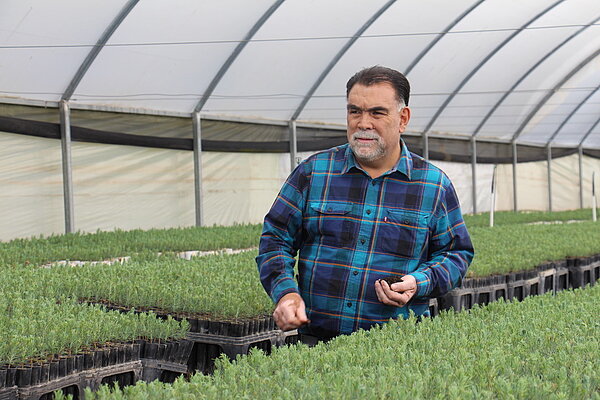
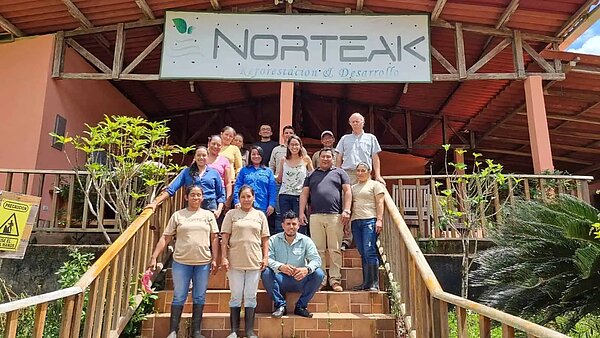
In Noh Bec, there is a job title you won’t find in any carbon methodology: “jefe del monte”, which translates to “boss of the forest”. It is one of four roles the ejido has created since joining the XiCO₂e Peninsula Forest Project, and it says a lot about what has changed. When we visited last year, a single technician carried the ejido’s entire technical workload. When we returned this September, we met a team.
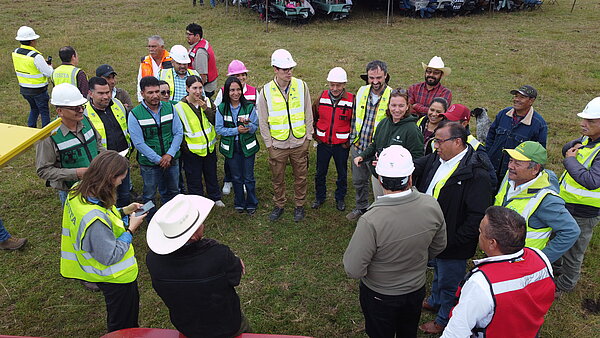
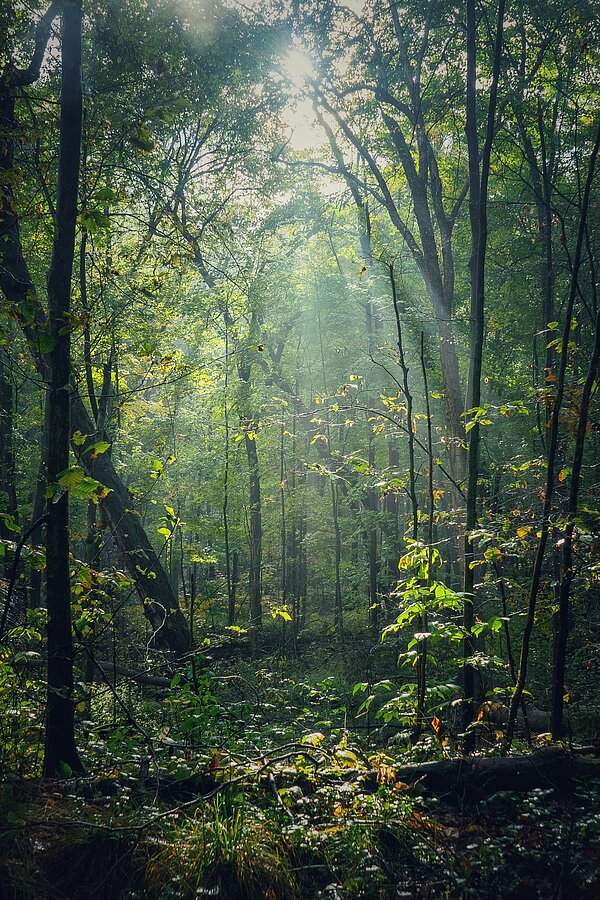
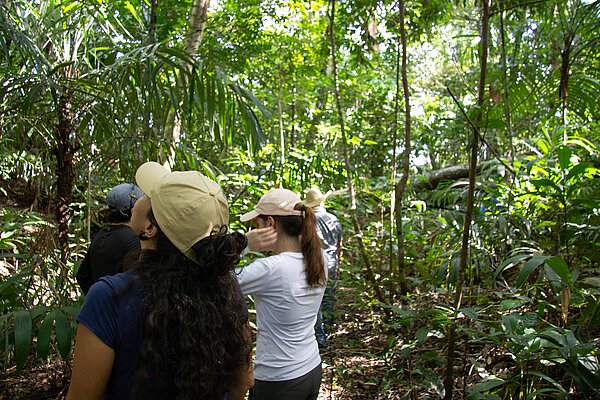
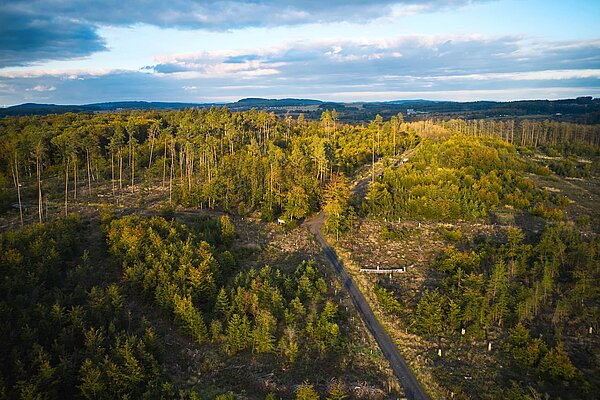
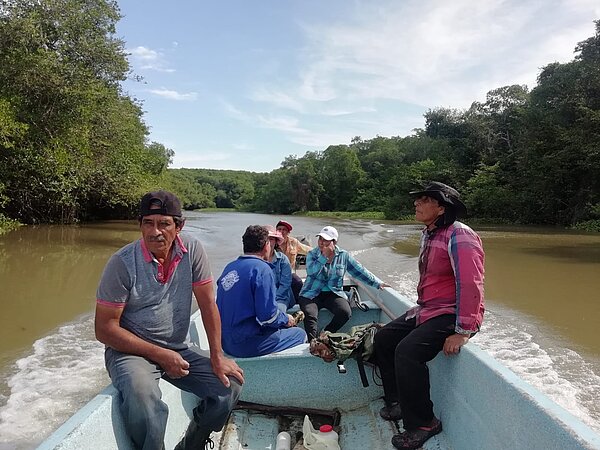
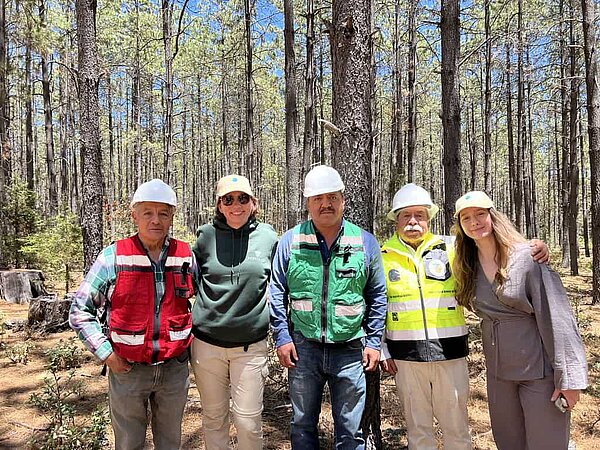
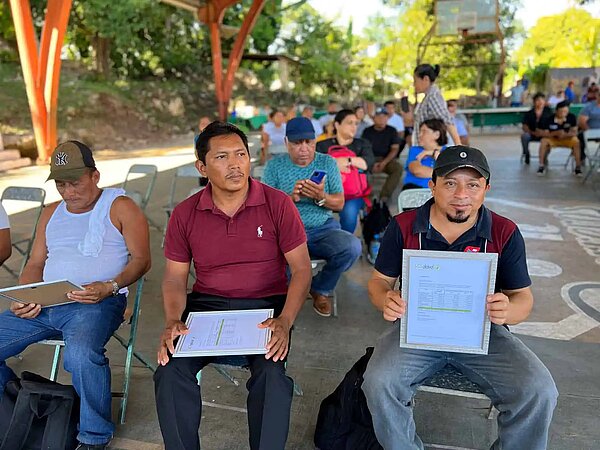
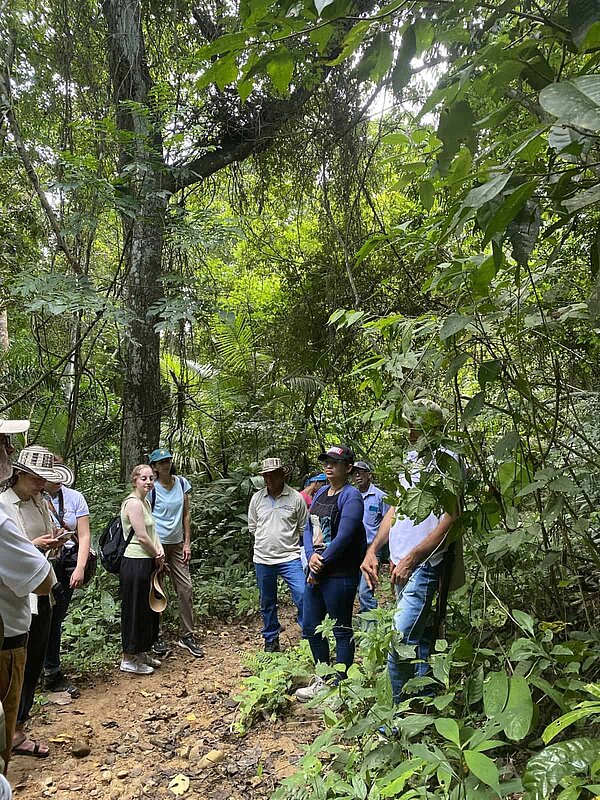
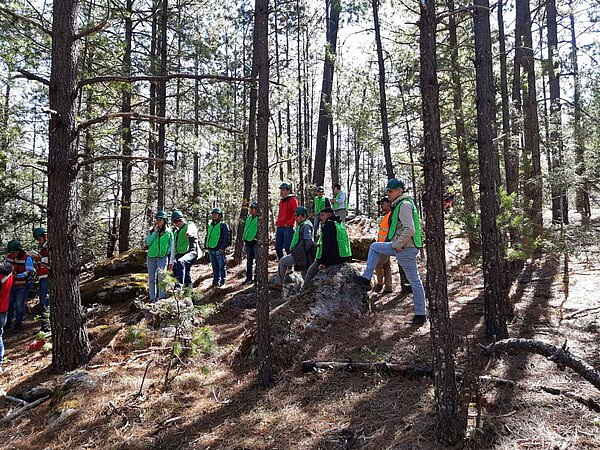
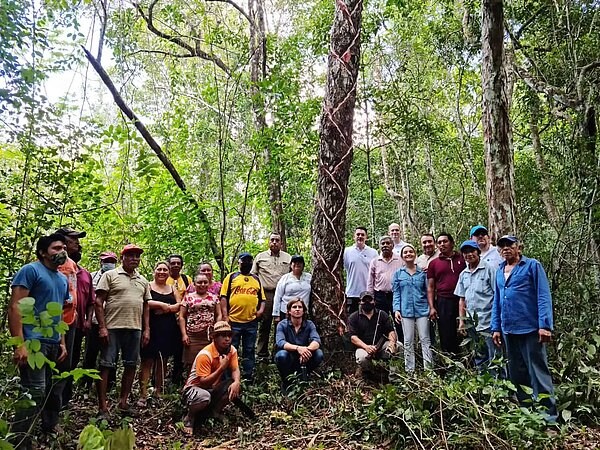
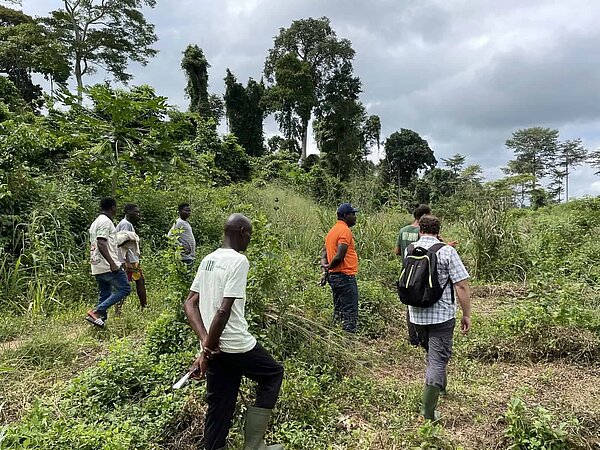
Over two days, our team walked the forests of the project’s two ejidos in Quintana Roo, first Noh Bec, then Naranjal Poniente, together with our implementation partner Ala-BoOl and the ejidos’ own forestry staff. This is what we saw on the ground, and the numbers that stand behind it.
At a glance
- 37,353 ha of tropical forest under improved forest management
- 2 ejidos: Noh Bec and Naranjal Poniente, Quintana Roo
- 241,660 t CO₂e verified above baseline in the first verification period
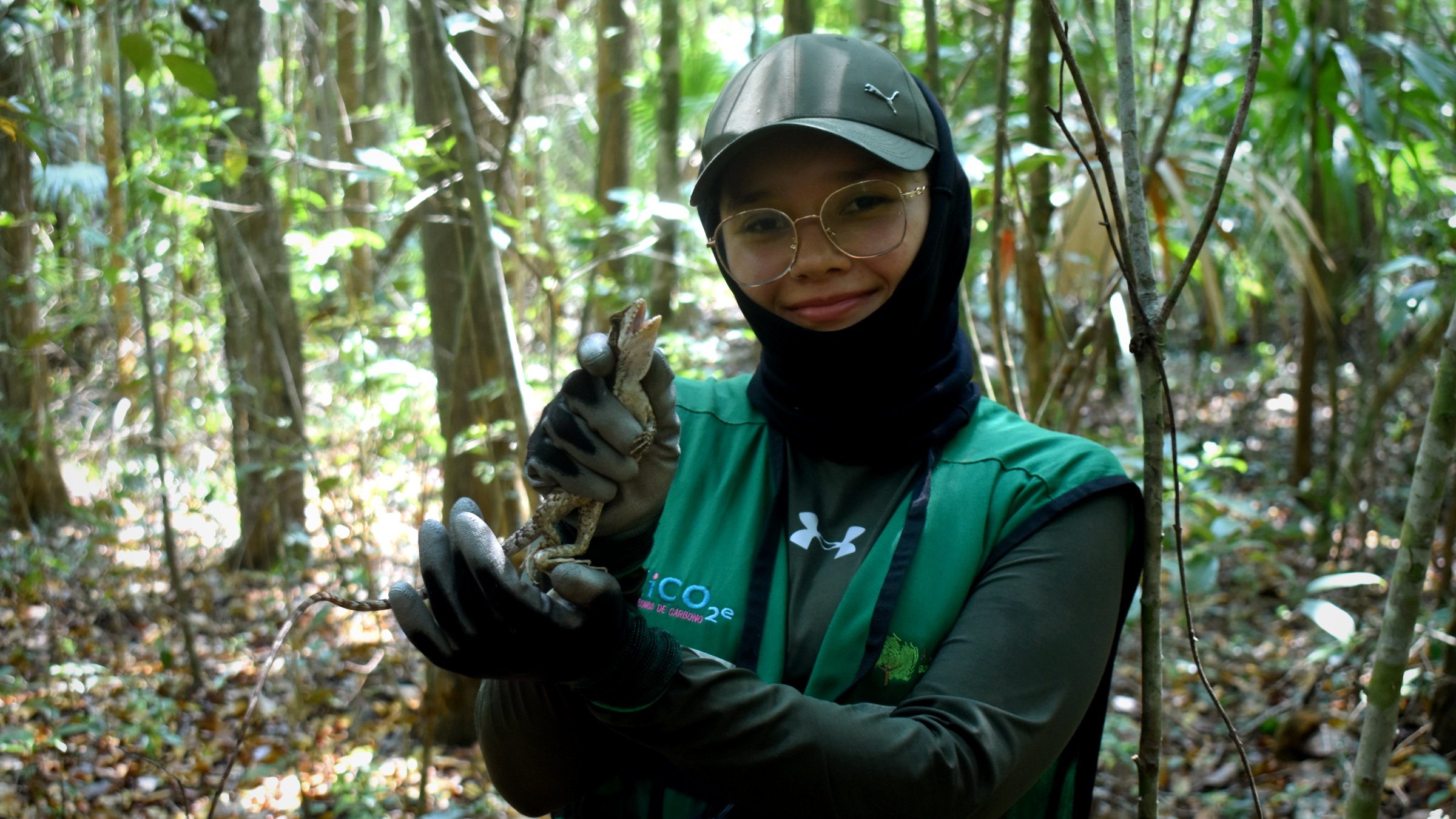
- 62 wildlife species confirmed in the 2023 biodiversity baseline
A team that didn’t exist a year ago
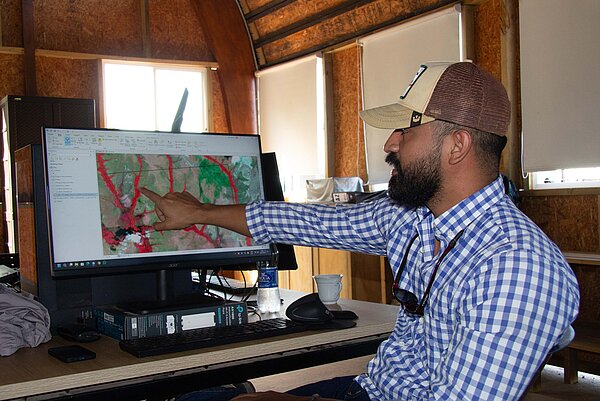
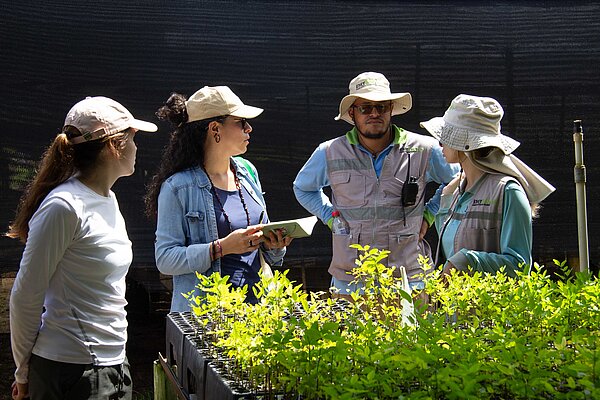
Today, four people plan and protect Noh Bec’s forest. One leads the technical work. One turns GPS points, satellite images and drone footage into harvest maps. One is training to fly the drone the ejido recently bought with carbon revenue, supported by an experienced drone pilot from the project team. And one is the “jefe del monte”, responsible for what happens on the ground. All four are new hires made possible by the project.
The technician who once did everything alone has not gone far: he now advises the neighbouring ejido, Naranjal Poniente, on how to design its harvest trails. Knowledge built in one community is now travelling to the next.
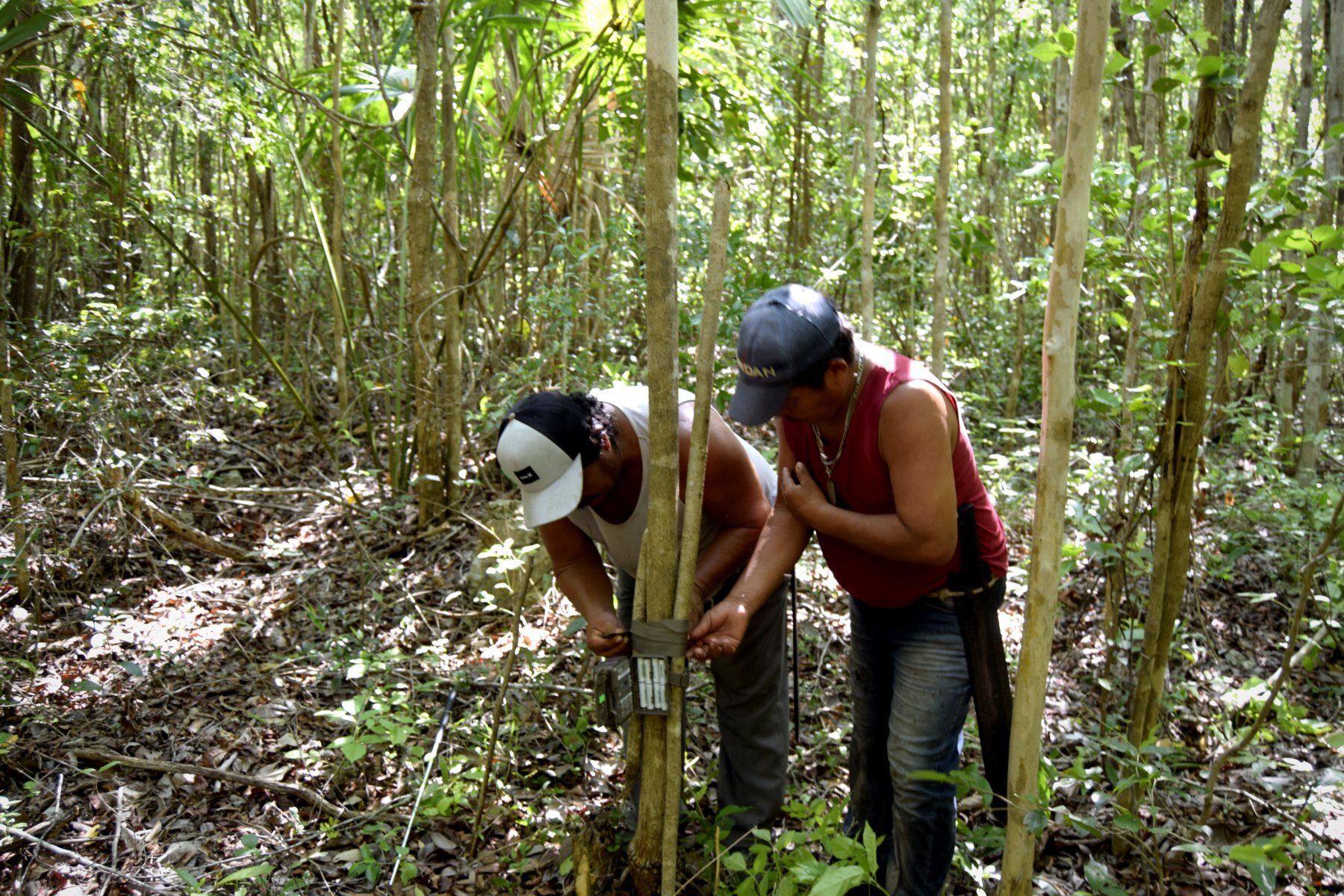
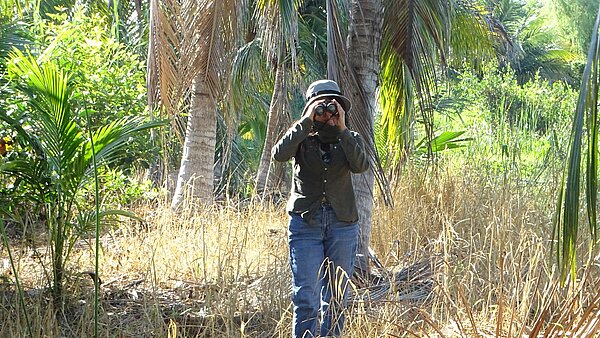
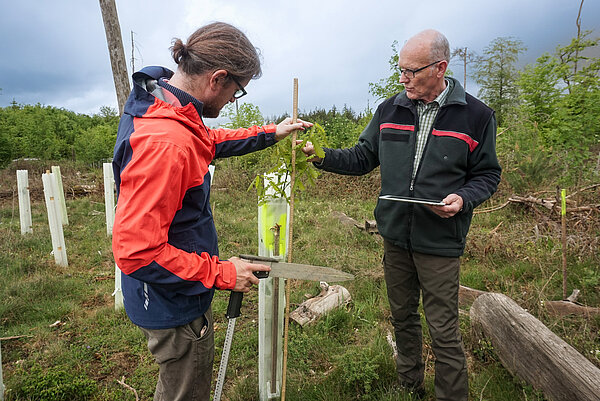
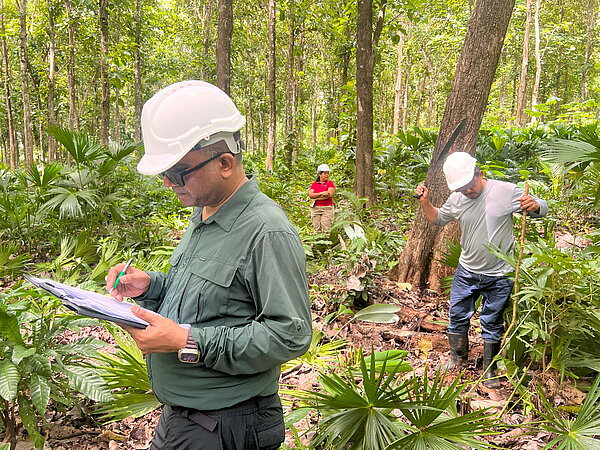
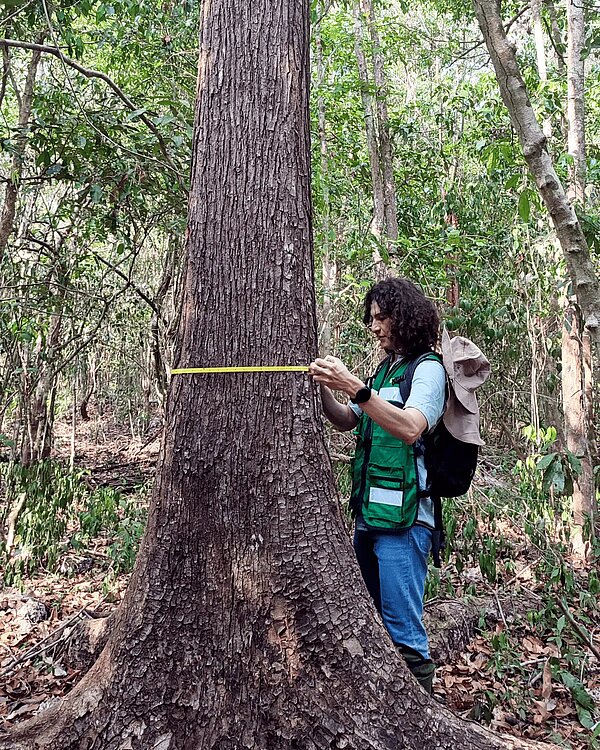
Ejido field crew measuring trees in the Peninsula Forest Project. © Ala-BoOl
Planning every metre
The clearest sign of change is how the harvest itself works. Under Reduced Impact Logging (RIL), every tree selected for harvest is marked by GPS long before any machine enters the forest. Using these points together with satellite and, from now on, drone imagery, the technical team designs one optimal access trail to each tree. The route is checked on foot, and only then do ejido members clear it. In the past, machines often had to turn back at obstacles and try another way, cutting several tracks through the forest to reach a single tree.
Noh Bec has also adapted its machines. A steel cable at the back of the tractor now pulls the felled trunk out over the last metres, so the tractor itself stays on the trail instead of driving into standing forest.
The machine operators told us something no report mentions: the new routes are better for them too. Fewer collisions with trunks and rocks, less damage to the tractors, and no more driving between breaking branches. Preparing the trails also creates paid work for ejido members and other residents, and the wood cleared along the way is sold rather than left behind.
We also watched a single tree come down. Even with careful planning, a falling crown opens a gap in the canopy – a reminder that harvesting is never invisible, and exactly why every metre is planned. The approach is measured, not just intended: an independent emissions analysis of Noh Bec’s 2024 harvest, based on a reduced-impact logging methodology developed by Dr. Edward A. Ellis of Universidad Veracruzana, found that the ejido’s FSC-certified, directionally felled harvest already outperforms unplanned extraction on avoided emissions. The project is now funding GPS-guided trail design, skidder training and geopositioning equipment to take the harvest the rest of the way.
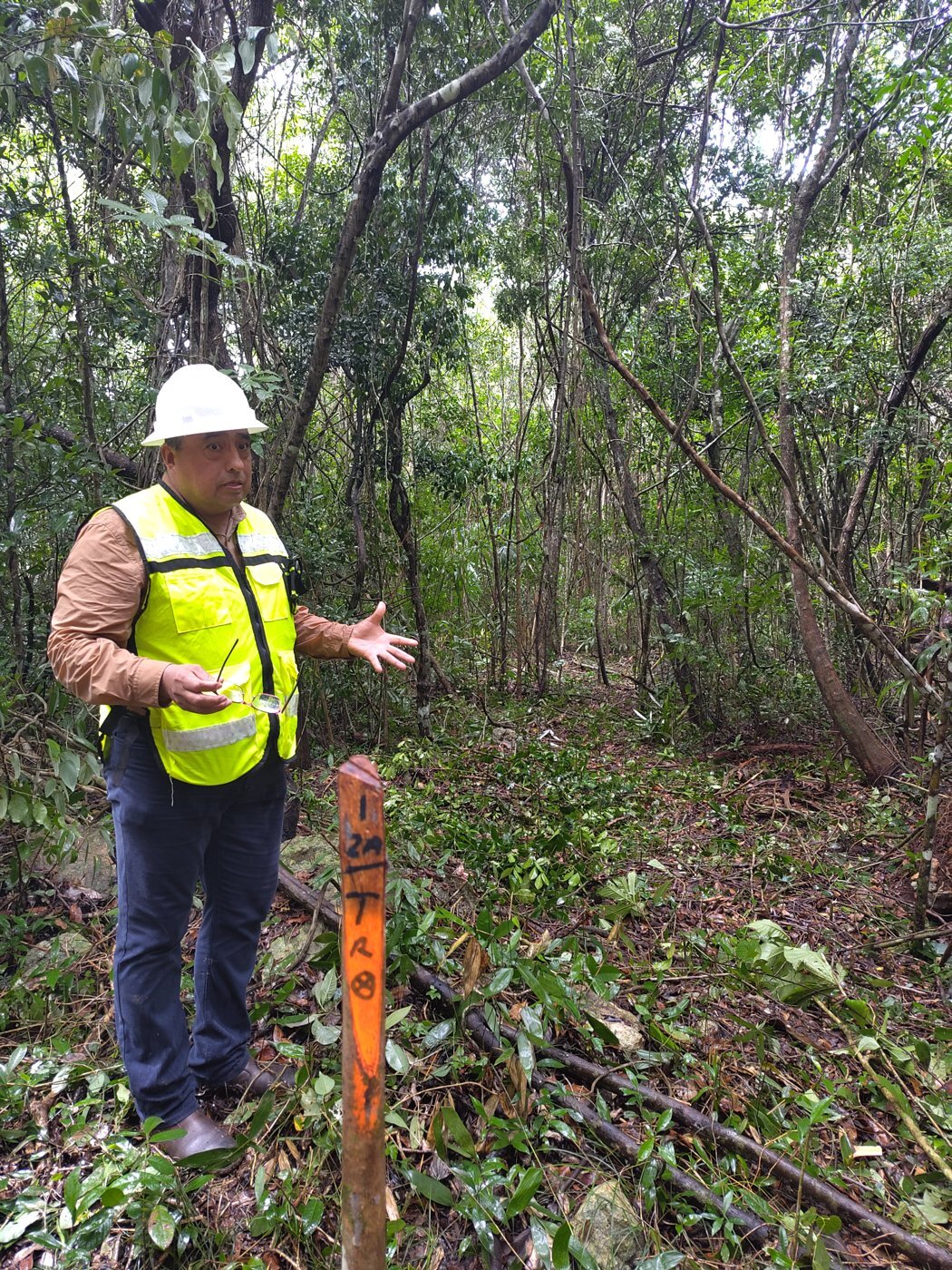
A Noh Bec forestry technician explains a GPS-marked harvest tag – the starting point for every planned trail. © FORLIANCE / Ala-BoOl, September 2026
More trees left standing
The project also changes how much is harvested. In 2026, Noh Bec’s assembly voted to reduce its commercial harvest by 30%, and 40% of this year’s income was held back for work that strengthens additionality and permanence. Since the project began, one in four trees that could have been harvested has been left standing, and the ejidos free around 1,000 additional trees a year from competing vegetation so they grow faster.
Picking up where national monitoring stopped
Mexico’s national forestry commission once measured the same trees every five years in permanent sampling plots across the country, to understand how the nation’s production forests grow. In 2019, the measurements stopped. Through the project, the ejidos have restarted them on their own land: 12 plots in Noh Bec and 3 in Naranjal Poniente. The data feeds long-term research on forest growth, carried out together with the University of Durango.
A forest that remembers
When Noh Bec’s founders first settled here, they found Maya ruins in the forest and decided to set that area aside, so that younger generations could see what the forest once looked like. Nearby stands a cedar the ejido’s own records list by its Maya name, Kuy ché, declared a Natural Monument by the state government of Quintana Roo.
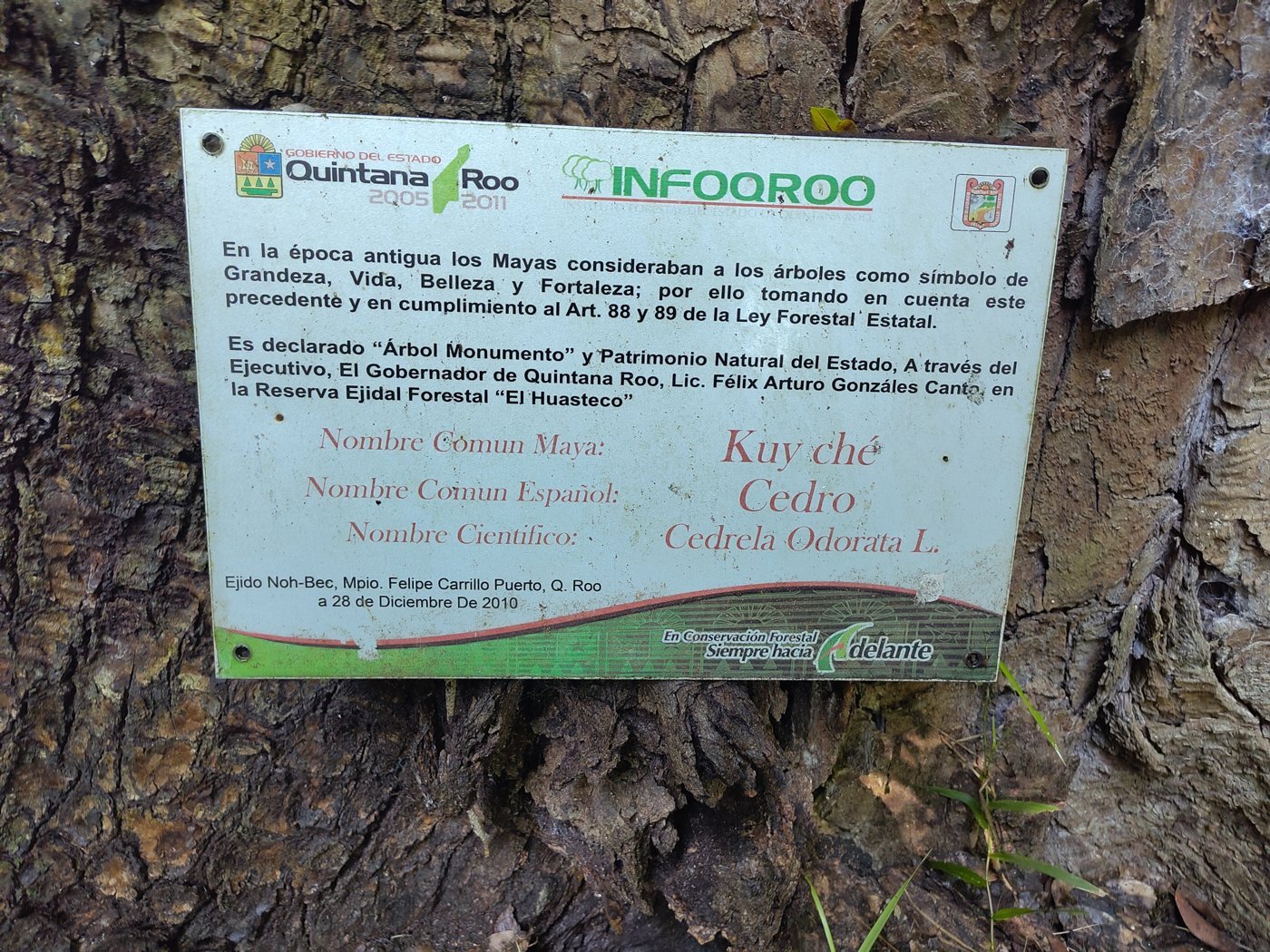
The protected Kuy ché cedar inside Noh Bec’s forest reserve, a Natural Monument of Quintana Roo. © FORLIANCE / Ala-BoOl, September 2026
Naranjal Poniente: a Maya ejido on its own path
The next day took us to Naranjal Poniente, a Maya ejido whose Permanent Forest Area holds stone carvings older than the ejido system itself. Here, consent carried the added weight that the UN Declaration on the Rights of Indigenous Peoples and ILO Convention 169 attach to it: free, informed and decided in the ejido’s own General Assembly, which voted unanimously to join the project on 16 December 2021. The community had already managed its forest on a 75-year harvest rotation since 1986, so the vote extended a long-standing discipline rather than starting one.
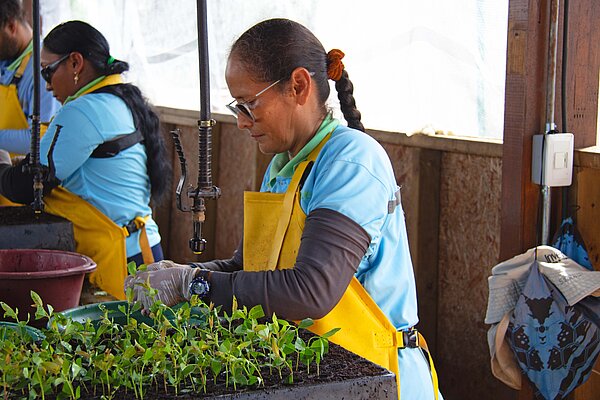
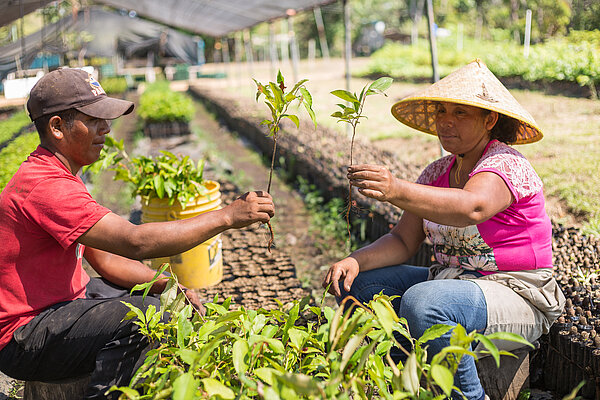
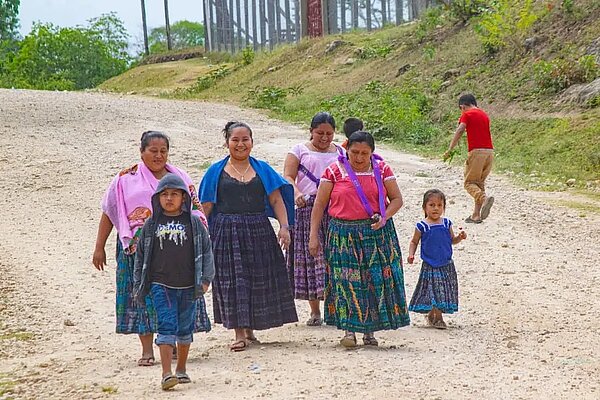
This year, Reduced Impact Logging reached Naranjal Poniente’s subcontracted harvest for the first time – after some initial resistance from contractors – and women joined the ejido’s reforestation work for the first time. A 20-person community fire brigade, trained and equipped with project revenue, now protects the forest, which alone added 69,597 t CO₂e above baseline in the first verification period. Of the carbon revenue the ejido keeps, 70% is reinvested in the forest and 30% reaches members directly, alongside a Common Fund that channels 10% of net project revenue to every resident, not only formal ejido members. Both ejidos recently renewed their FSC certification.
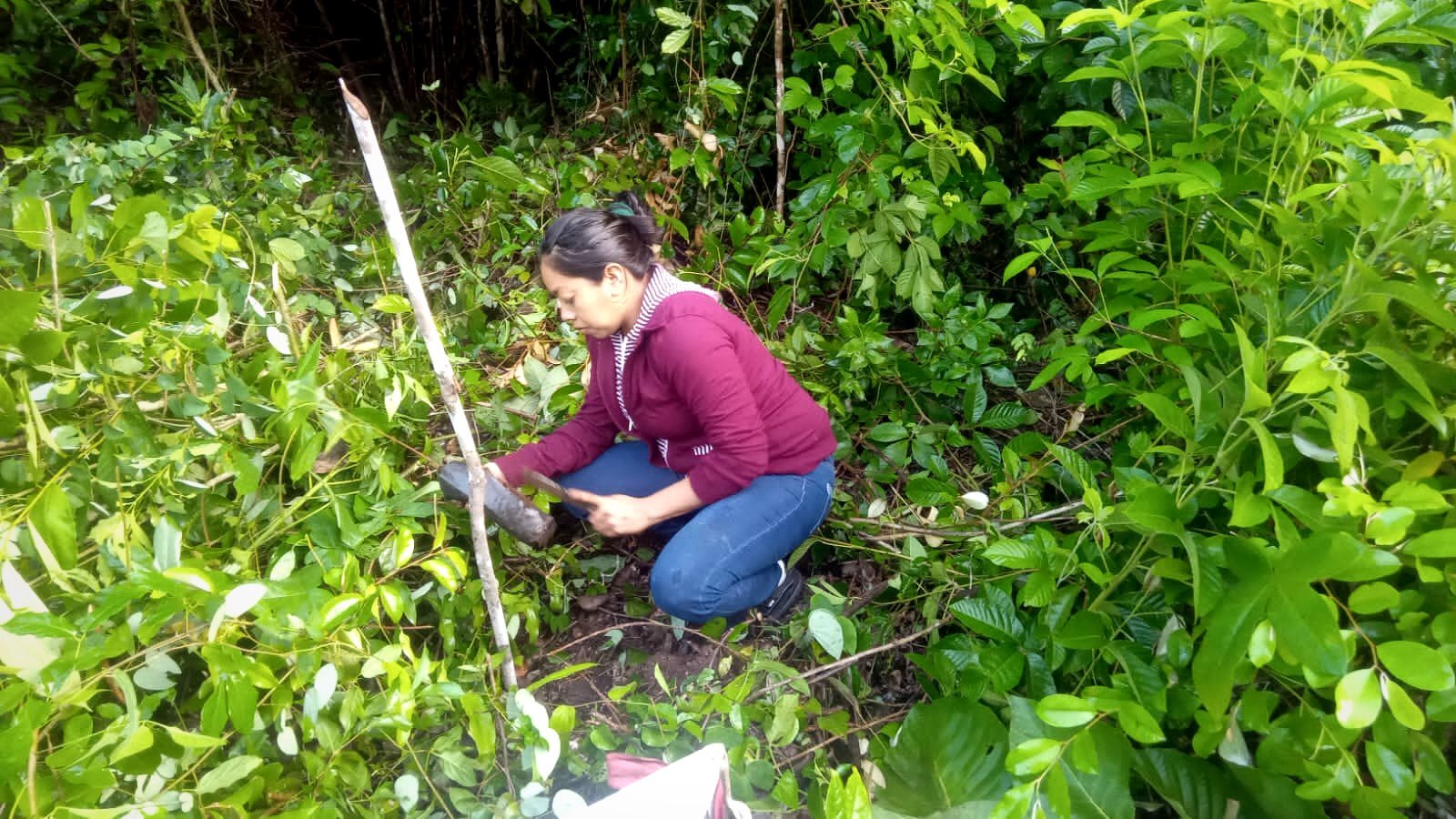
Women joined Naranjal Poniente’s reforestation work for the first time this year. © FORLIANCE / Ala-BoOl, September 2026
What the forest protects
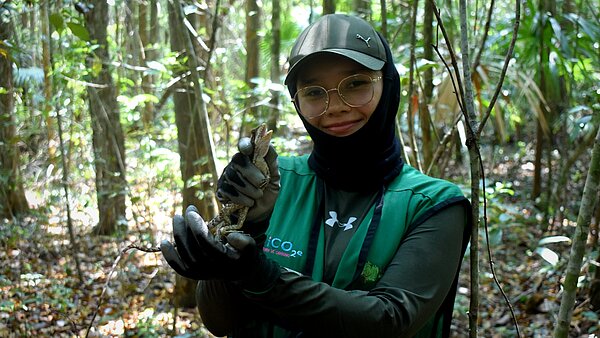
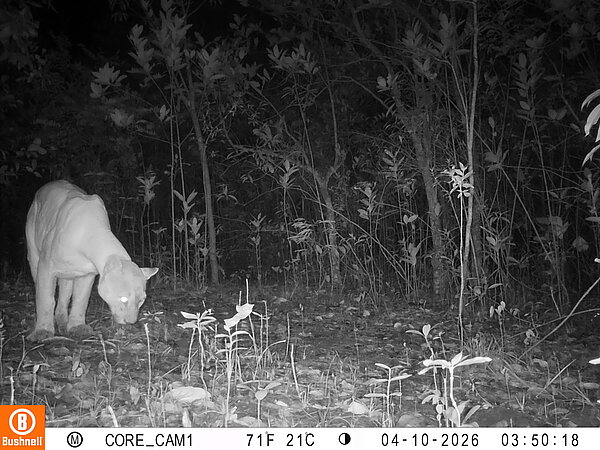
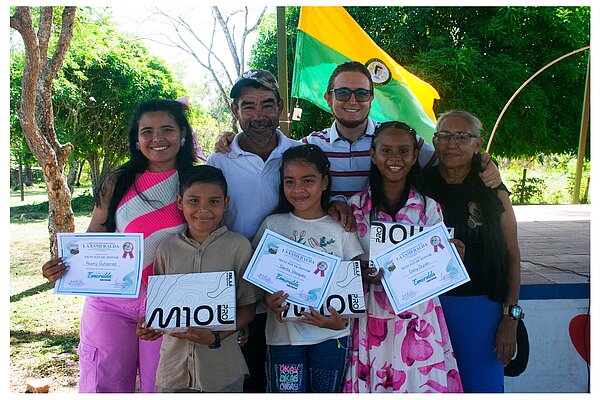
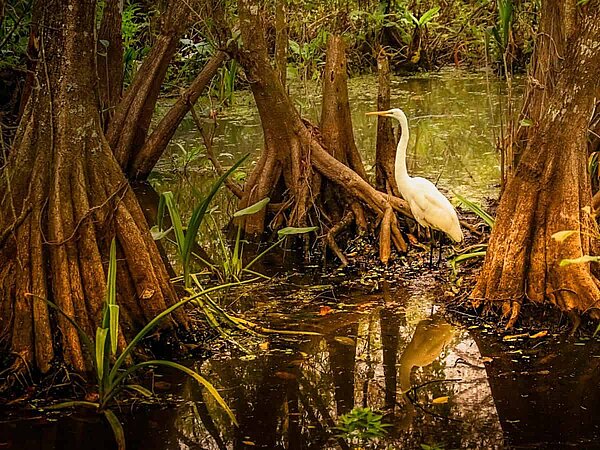
The project’s 2023 biodiversity baseline logged 171 wildlife records across 62 confirmed species, including a jaguar caught on camera trap inside a High Conservation Value Area, two independent detections of Baird’s tapir and the black howler monkey, alongside 91 native tree species. Between baselines, residents keep watch themselves through “Los Ojos de la Selva” (The Eyes of the Jungle), a community photo contest that has turned neighbours into the project’s most consistent wildlife spotters. Across both ejidos, total verified carbon stored now stands at 9,151,298 t CO₂e – and this year, Laguna Kana joined the project as a new ejido area.

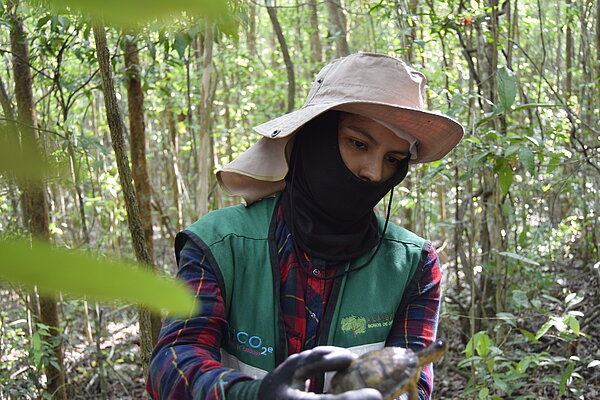
A turtle recorded during the project’s biodiversity baseline. © Ala-BoOl
Why carbon finance makes the difference
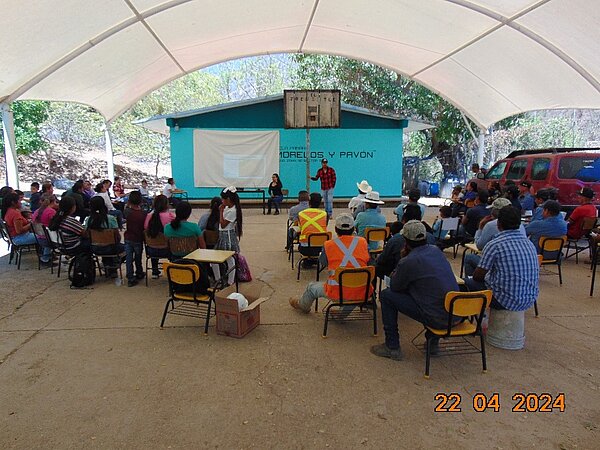
Without carbon finance, Noh Bec’s own forest budget stretches to fire prevention and a few hectares of reforestation a year. Biodiversity monitoring, pest control and updates to the forest management plan remain unfunded. That gap – between what a healthy forest needs and what timber revenue alone can pay for – is exactly what the project closes. It also shows in how the communities govern themselves: since 2022, the assemblies meet three times as often on project business.
What’s next
Noh Bec is already thinking beyond selling logs, with plans for solar-powered wood drying and for processing its timber into finished products – a step toward more value from every tree that is harvested, and fewer trees that need to be.
See it for yourself
Numbers can tell you a forest is growing. A visit tells you who is making it grow. If you would like both – the field perspective and the verified data from the project’s latest Impact Report covering Noh Bec and Naranjal Poniente – get in touch with the FORLIANCE team. We would be glad to share the report or arrange a visit.
About FORLIANCE
FORLIANCE is an international developer of nature-based climate projects. Since 1998, the company has worked with local partners to initiate, finance, develop and manage projects that support climate mitigation, biodiversity and local communities. Its expertise spans project design, carbon certification and long-term monitoring, supporting companies and investors in financing nature-based climate solutions.

About the Author
Alona Mikhova, Project Portfolio & Commercialization Manager at FORLIANCE
Alona Mikhova is a Project Portfolio Specialist and Commercialization Manager at FORLIANCE, with over a decade of sustainability expertise and five years in the carbon sector. She translates complex project information into credible communications, supports due diligence and corporate net-zero strategies, and connects teams to deliver value for companies, biodiversity, and local communities.